
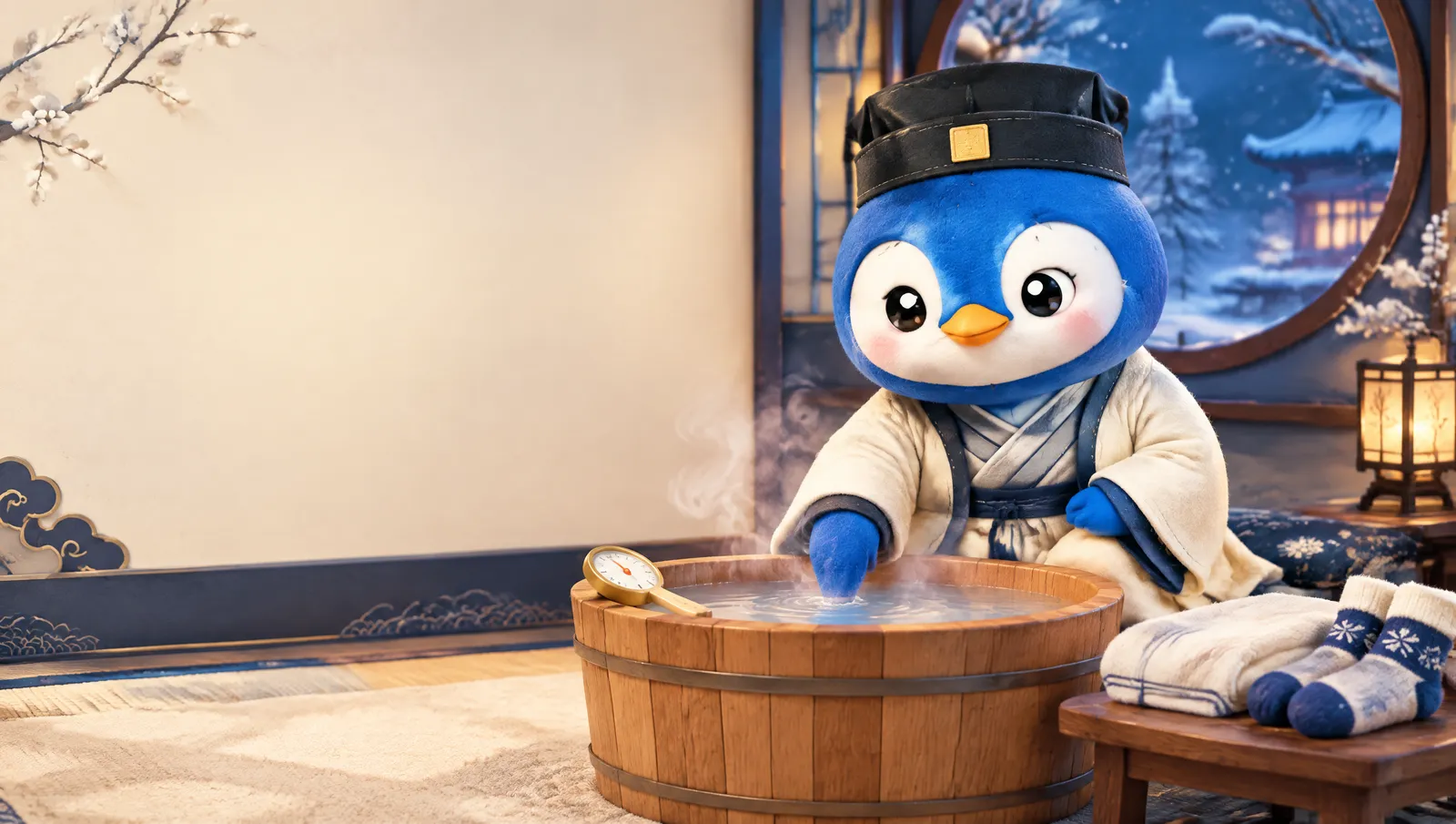
Myth buster · not news
The hotter the foot soak, the better?
When the weather turns cold, many people soak their feet in very hot water before bed, assuming hotter water works better. A warm foot bath can feel comforting, but scalding water is not more beneficial. It can burn the skin and put extra strain on the body.
When the weather turns cold, many people soak their feet in very hot water before bed, and some even believe the water must scald the skin red, or bring on a heavy sweat, before it can be considered effective. A warm foot bath can leave the feet comfortably warm and help the body relax. Treating “the hotter, the better” as a fixed rule, however, overstates the benefit and leaves out the risk of burns and unnecessary strain.
Where the saying comes from
Traditional wellness often speaks of cold causing stagnation, and of warmth helping movement. The feet are also described as a place where many channels gather. In cold weather, soaking the feet in comfortably warm water can ease the chill in the feet and leave the body feeling gradually warmer, which is why the habit becomes common once winter begins. After Lesser Snow, damp cold often feels sharper, so the practice is mentioned even more often.
The difficulty is that many people take “warm” to mean “as hot as possible,” and judge success by whether they break into a heavy sweat. In traditional Chinese medicine, warming and unblocking refers to moderate warmth that makes qi and blood easier to move, not to stimulating the skin with a temperature close to a burn. There is also the traditional reminder that sweat is the fluid of the heart, meaning that excessive sweating can leave a person tired and thirsty, and does not prove that the soak was more effective.
In other words, what the older experience really emphasises is warming the feet gently, not continually raising the water temperature.
Why “the hotter, the better” is too absolute
Several traditional-medicine care notes and public-education articles suggest keeping the water at about 38 to 40 degrees Celsius, warm to the touch but not scalding, for roughly 15 to 20 minutes, and a shorter time for older people. Water that is too hot can leave the skin red, dry, or burned. Blood vessels may also dilate excessively, and some people feel dizzy or notice palpitations. Some health education further notes that water above about 43 degrees Celsius may damage the skin.
Modern medicine also warns that if feeling in the feet is reduced, as can happen in some people with diabetes, it becomes harder to notice that the water is already too hot, and the risk of a burn rises. Relevant organisations advise washing the feet in warm, not hot, water, avoiding prolonged soaking, and testing the temperature with a thermometer or an elbow. For these people, “the hotter, the better” brings no extra benefit and may cause serious harm.
A more accurate view is this: whether a foot soak feels comfortable depends on a moderate temperature, a suitable length of time, and whether it fits the person’s condition at that moment, not on how hot the water is.
Other common situations
People with problems in the blood vessels of the legs, poor venous return, or existing breaks, blisters, or ulcers on the feet should not soak for a long time in hot water on their own, because this may worsen discomfort or raise the chance of infection. Anyone with such a history should check with a clinician first, rather than treating a foot soak as a step they can decide entirely by themselves.
Some people add herbal packs, mugwort, or other materials to the water. External herbal use also has to suit the individual; it is not appropriate for everyone, and it cannot take the place of proper medical care. During pregnancy or menstruation, or if a person is already prone to a dry mouth, restlessness, or sensitive skin, it is unwise to add packs of unknown origin. If the skin becomes itchy, red, or painful, stop at once.
Soaking immediately after a large meal leaves some people feeling uncomfortable in the stomach, or dizzy. A steadier approach is to leave some time after eating, for example about an hour, or to set aside an unhurried period before bed. After the soak, dry carefully between the toes, put on socks, and stay warm. Do not walk into a cold draught or go barefoot on a cold floor straight afterwards.
After Lesser Snow, temperatures fall, and a foot soak can be part of keeping warm in daily life. The solar term itself does not require a higher water temperature. This is a time to be more careful about keeping the water moderate, limiting the duration, and staying warm afterwards, not a reason to “fight the cold” with water that is too hot.
When to see a doctor first
The following should not be dismissed as “the water was not hot enough” or “I got chilled”: chest tightness, palpitations, obvious dizziness, shortness of breath, or lasting discomfort during or after a soak; blisters, broken skin, heat and swelling in the feet, or a wound that is slow to heal; lasting numbness, reduced feeling, or a clear change in the colour or temperature of the feet. These need a professional assessment, to understand whether a burn, an infection, or a circulation or metabolic problem may be involved.
The material on this site only helps readers understand common ideas. It cannot take the place of a consultation in person.
A middle path
Shift the focus from “was the water hot enough” to “was it gentle enough.” In general, measure the water with a thermometer, keep it comfortably warm rather than scalding, and soak for about 15 to 20 minutes, until the feet are warm and the body feels lightly warmed. A heavy sweat is not the goal. If you feel unwell, stop at once, dry the feet, and keep warm.
A foot soak is only one everyday way to stay warm and relax. It does not guarantee better sleep, and it cannot replace a broader look at tiredness, feeling cold, or other discomfort. If you would like a first sense of whether you feel the cold more than usual in this season, you can take the constitution quiz and consider warmth, rest, and meals together, rather than simply raising the water temperature.
Special care
People with diabetes, reduced feeling in the feet, vascular disease in the legs, or broken skin on the feet, as well as older people, young children, and pregnant women, should not soak their feet for a long time in very hot water on their own. If the feet need to be washed, use warm water and test the temperature first. If chest tightness, chest pain, difficulty breathing, a cold sweat, or a rapidly worsening foot wound appears, seek medical care at once.
This article discusses a common everyday idea. It is not a judgement about any individual reader. Circumstances vary, and a professional needs to consider the overall picture.
A common misunderstanding: is hotter water always better?
No. A warm foot soak can bring comfort and relaxation, but water that is too hot is not more beneficial, and it raises the risk of burns and unnecessary strain. A steadier approach is to keep the water comfortably warm, limit the time, then dry the feet and stay warm. People with existing conditions or unusual feeling in the feet should check with a clinician first, and should not set the temperature by the rule that hotter is better.
Remember
A foot soak is not better because the water is hotter. Keep it comfortably warm, not scalding, and do not soak for too long. Warm feet and a lightly warmed body are enough; profuse sweating is not the goal. People with diabetes or reduced feeling in the feet should measure the water with a thermometer and check with a clinician first.
Related acupoints
Based on traditional Chinese medicine for general wellness education — not a medical diagnosis or treatment. If symptoms persist, are severe or unusual, please see a doctor or registered Chinese medicine practitioner.