
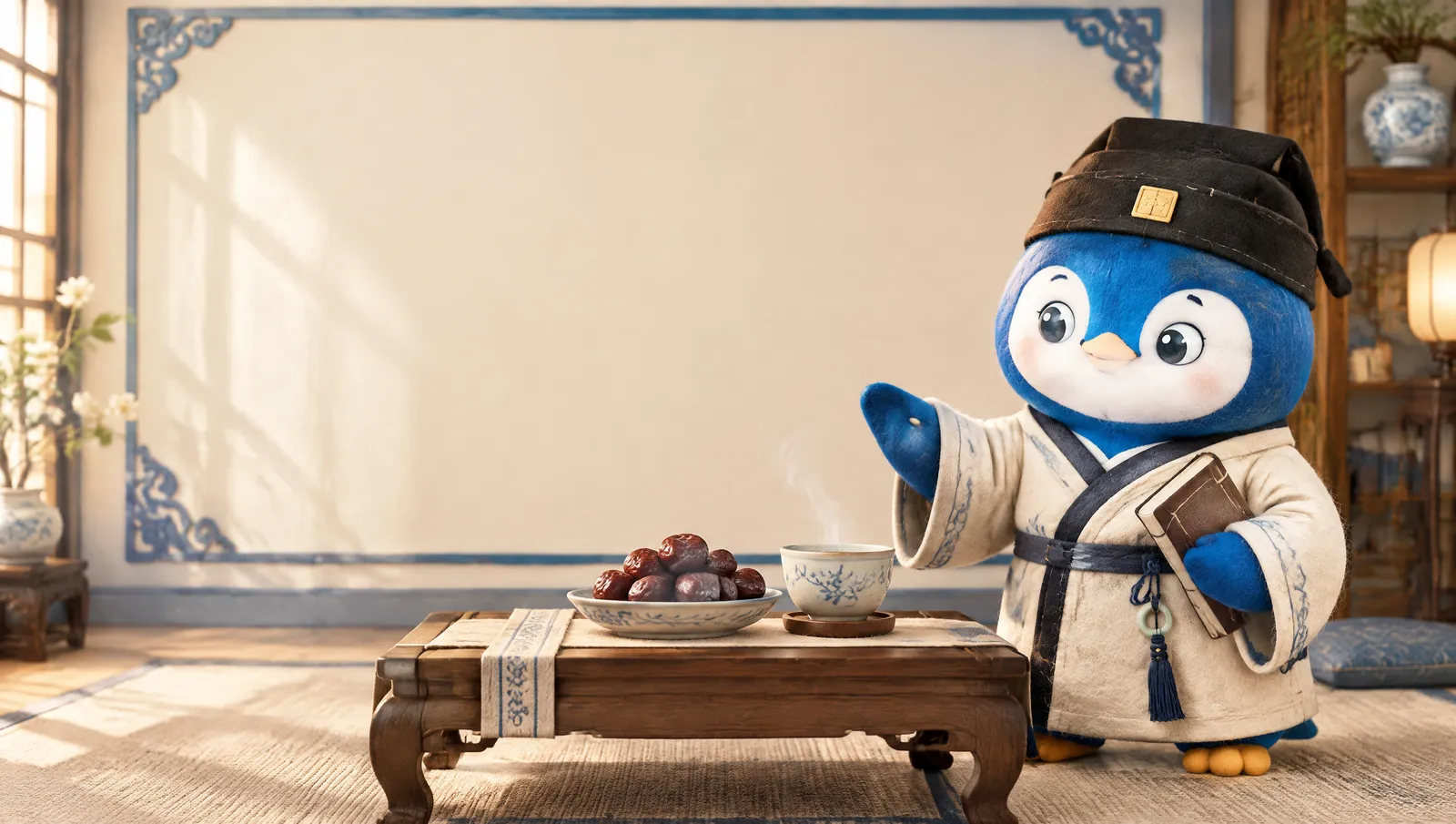
Myth buster · not news
Do red dates always build blood?
Red dates are a familiar wellness food, but they cannot build blood on their own. In Chinese medicine, jujube mainly tonifies the middle, replenishes qi and gently nourishes the blood. For anaemia, dates are not high in iron. If paleness or tiredness lasts, look for the cause first.
When the face looks a little pale, energy dips, or a period has just ended, many people reach for a handful of red dates, or brew a pot of red-date and longan tea, and feel they are already “building blood.” Red dates are a familiar, gentle kitchen ingredient, and traditional Chinese medicine does speak of them as gently nourishing the blood. Treating “I ate red dates” as the same thing as “my blood has been replenished,” though, skips the step of telling situations apart, and can hide causes that actually need attention.
How does Chinese medicine see red dates?
In the materia medica, red dates are usually called dazao (jujube). They are sweet and warm, and they mainly enter the spleen, stomach and heart meridians. The Chinese Pharmacopoeia records their actions as tonifying the middle and replenishing qi, and nourishing the blood to calm the spirit. They are often used when the spleen is weak, appetite is poor, there is tiredness with loose stools, or the person feels unsettled and sleeps poorly. In other words, they are first a food that helps the spleen and stomach move and supports middle qi. Nourishing the blood is a milder, supporting action, not the work of a dedicated blood tonic.
Herbs more often classed as blood tonics include danggui, prepared rehmannia, white peony and ejiao (donkey-hide gelatin). In formulas, jujube more often harmonises the other herbs, supports qi, and only then helps qi and blood form. That “qi can generate blood” is a common Chinese-medicine idea: when the spleen and stomach transform food well, the essence of the diet is more able to become qi and blood. Calling red dates a “blood-building superfood” overstates their place.
Putting three or so dates into a soup or a cup of tea can be a mild, easy habit for many people. That is not the same as using red dates as the main way to deal with a pale face or anaemia.
Why “they always build blood” is too absolute
Popular advice likes to turn “I look pale and feel tired” into “blood deficiency,” and then into “eat more red dates.” That skips two important distinctions.
First, what Chinese medicine calls blood deficiency is usually more than a slightly pale face. It often includes paler lips and nails, dizziness, palpitations, restless sleep, or a lighter or delayed period. These signs need to be read together. Feeling a little tired lately is not enough to place yourself in that pattern. Blood deficiency in Chinese medicine is also not exactly the same as anaemia in Western medicine. The latter is understood through tests; the former is read from the whole picture. The two can appear together, but one does not stand in for the other.
Second, if “building blood” is taken to mean helping iron-deficiency anaemia, hospital nutrition and health education often points out that red dates are not high in iron. Dried dates usually contain only a few milligrams of iron per 100 grams, clearly less than foods such as animal liver, and the iron is the less readily absorbed plant (non-haem) form. Relying on more and more dates to replenish iron therefore does very little. Dried dates are also high in sugar, so they are a poor choice as a tonic to eat in large amounts.
The cause matters even more. Heavy periods, a very narrow diet, or chronic blood loss from the gut can all show up as paleness and tiredness. These situations should be looked into and managed by a doctor, not treated with larger servings of dates, longan or ejiao. Assuming the dates have already “fixed it” can delay a problem that actually needs care.
Other common situations
Red-date and longan tea, or dates boiled with brown sugar, is a popular winter “blood-building” pairing. Longan is also sweet and warm, so used with dates it makes the drink sweeter and more heating. For someone whose spleen and stomach are on the weak side and who feels the cold, an occasional warm cup can be a comfort. For someone with a thick, greasy tongue coating, bloating, a sticky taste in the mouth, or who already feels thirsty, gets mouth ulcers or feels irritable, drinking this in large amounts every day may instead add dampness and heat and make those discomforts worse.
Candied dates and date pastes are even higher in sugar, and are even less suitable as a tonic. The skin of the date is tough, so eating them raw and whole can be hard to digest for some people. Cooking them until soft, removing the stones, or adding them to soup or congee is usually easier. The Pharmacopoeia’s usual amount is about 6 to 15 grams; in everyday cooking, about three to five dates is enough. There is no need to eat a whole handful at once.
People with high blood sugar, who are watching their weight, or who already bloat easily should be especially careful with portion and frequency. Red dates can be part of a meal. They are not a tea that suits everyone, every day.
When to see a doctor first
These situations should not be handled only as “blood deficiency, just eat some dates”: a face that stays pale, becoming short of breath or getting palpitations easily, worsening dizziness, much heavier periods or a clearly irregular cycle, black stools, a clear drop in appetite, or unexplained weight loss. These need a professional assessment, to see whether anaemia or another condition is involved.
On the Chinese-medicine side, if along with the wish to eat dates there is lasting bloating, loose stools or the opposite constipation, a dry or bitter mouth, poor sleep, or if self-chosen tonics then bring more bloating, mouth ulcers or irritability, stop adding more and seek a consultation instead. This site only helps readers understand common ideas. It cannot take the place of an in-person visit.
A middle path
First put red dates back in their place as everyday food. A date tea or a few dates in the soup is fine, in a modest cooked amount. Notice whether you feel better afterwards, or more bloated and thirsty. Meals as a whole should still be regular and varied. Do not pin every hope on one dried fruit.
If tests later show iron deficiency or a similar problem, follow the advice of a doctor or dietitian on how to adjust the diet, rather than using red dates in place of professional guidance. Chinese-medicine support is also personal. People with weaker qi, or a weaker spleen and stomach, often tolerate a modest amount of dates more easily. People with more phlegm-dampness or damp-heat, or who already feel overheated, should not add too many sweet, warm foods. Danggui, siwu formulas and ejiao should also not be bought for long-term use just because someone “wants to build blood.”
To get a first sense of your overall tendencies, you can take the constitution quiz, and put the wish to “build blood” back into a wider picture of digestion, sleep, feeling cold or hot, energy and the menstrual cycle, rather than drawing a conclusion from one ingredient.
Special care
Pregnant people, children, older adults, and anyone with a long-term illness, high blood sugar or who is taking medicine should check with a doctor or a registered Chinese medicine practitioner before changing tonics or herbs. Red dates are relatively high in sugar, so people with diabetes should be especially careful with the amount.
If there is sudden marked shortness of breath, fainting, heavy bleeding, or stools that look like tar, seek medical care at once. Do not keep taking self-chosen tonics.
This article explains a common everyday idea. It is not a judgement about any one reader. The right approach depends on the whole picture, and needs a professional to interpret it.
Common myth: do red dates always build blood?
They do not. In Chinese medicine, red dates (jujube) are mainly a gentle food for tonifying the middle, replenishing qi, and calmly nourishing the blood. Their blood-nourishing effect is supportive, not the work of a dedicated blood tonic. If the question is iron-deficiency anaemia, they are not high in iron, and eating more dates will not replenish iron on its own. When the face stays pale or tiredness lasts, look for the cause first. A few dates in soup or tea can be part of an ordinary diet, but they are not a blood-building miracle food.
Remember
Red dates are not a blood-building superfood. They are a gentle everyday food for qi and, more mildly, the blood. If paleness or tiredness lasts, look for the cause first rather than eating more dates.
Related acupoints
Related ingredients
Based on traditional Chinese medicine for general wellness education — not a medical diagnosis or treatment. If symptoms persist, are severe or unusual, please see a doctor or registered Chinese medicine practitioner.