
Learn TCM
Understand one wellness idea at a time
Beginner TCM ideas plus PANguin's myth busters — short, clear and sourced.

TCM body clock
Right now: Pericardium hours
Time with people you like and something relaxing.
See all twelve periods
What is qi?
TCM uses "qi" to describe the energy that keeps the body running.
Read
Yin and yang
Cool and warm, rest and activity — health is keeping them in balance.
Read
Five elements and five organs
Wood, fire, earth, metal and water map to liver, heart, spleen, lung and kidney.
Read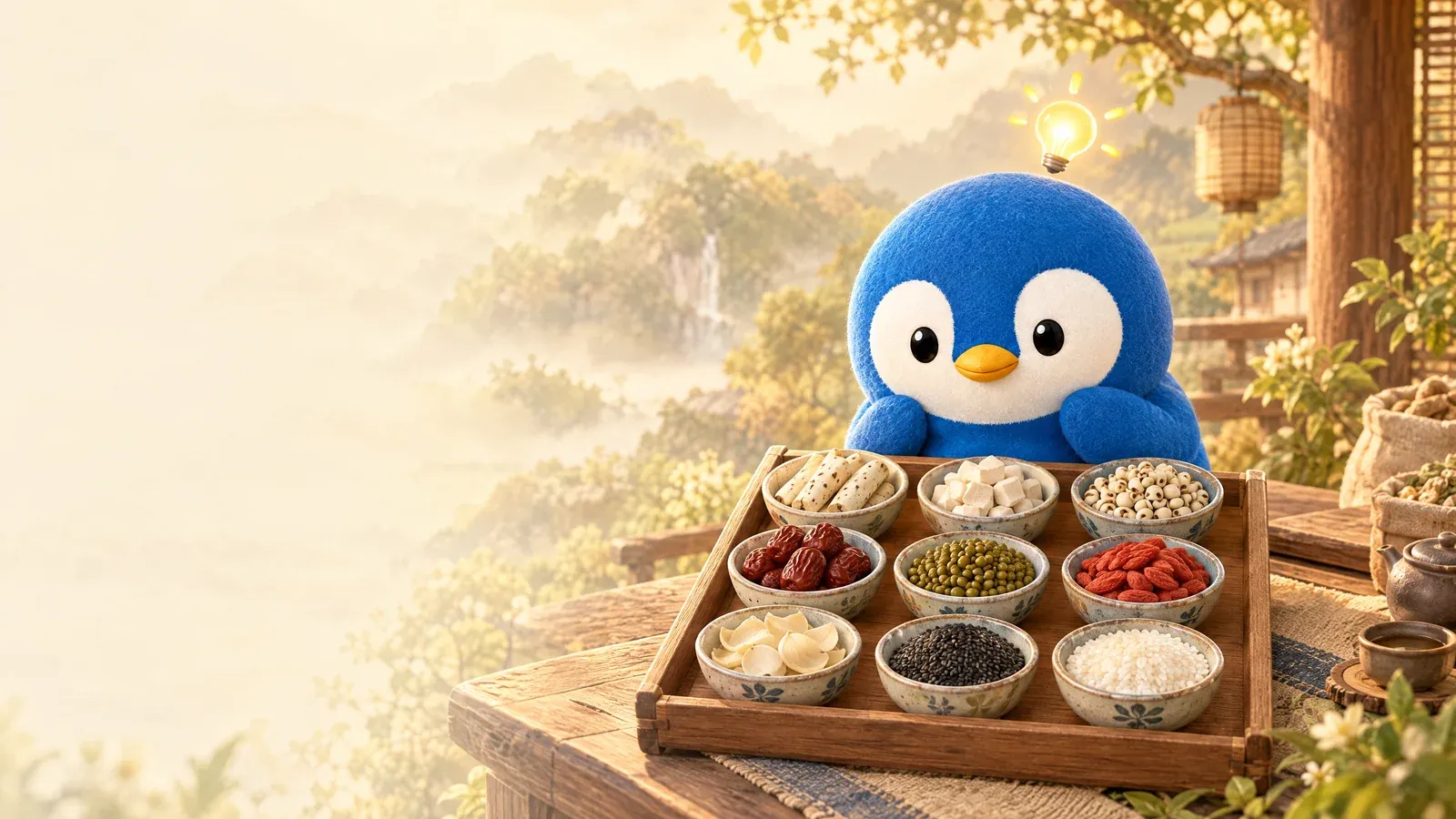
The nine constitutions
Different constitutions suit different ways of eating.
Read
The 24 solar terms
Roughly every 15 days a new term — a cue to adjust how you live.
Read
Food natures and flavours
Cold, cool, neutral, warm, hot — plus sour, bitter, sweet, pungent and salty.
Read
What does tongue reading look at?
Colour, coating and shape are key clues in TCM observation.
Read
The TCM body clock
Twelve two-hour periods, twelve meridians.
ReadMyth busters
 Myth buster · not news
"No added sugar" means no sugar?
Many juices with no added sugar still contain free sugars.
Read Myth buster · not news
Autumn means it is time for big tonics?
Seasonal TCM wellness adjusts to the person — not everyone needs tonics.
Read Myth buster · not news
Rainy day = everyone has "dampness"?
Weather is the environment; constitution is personal. They are not the same thing.
Read Myth buster · not news
The more herbal "cooling" tea, the better?
Most cooling teas are cold in nature and not for everyone, every day.
Read Myth buster · not news
Ginger tea "detoxes" you?
"Detox" is not an accurate TCM or medical claim.
Read Myth buster · not news
One acupoint fixes everything?
Acupressure supports relaxation — it is not a replacement for a professional assessment or seeing a doctor.
Read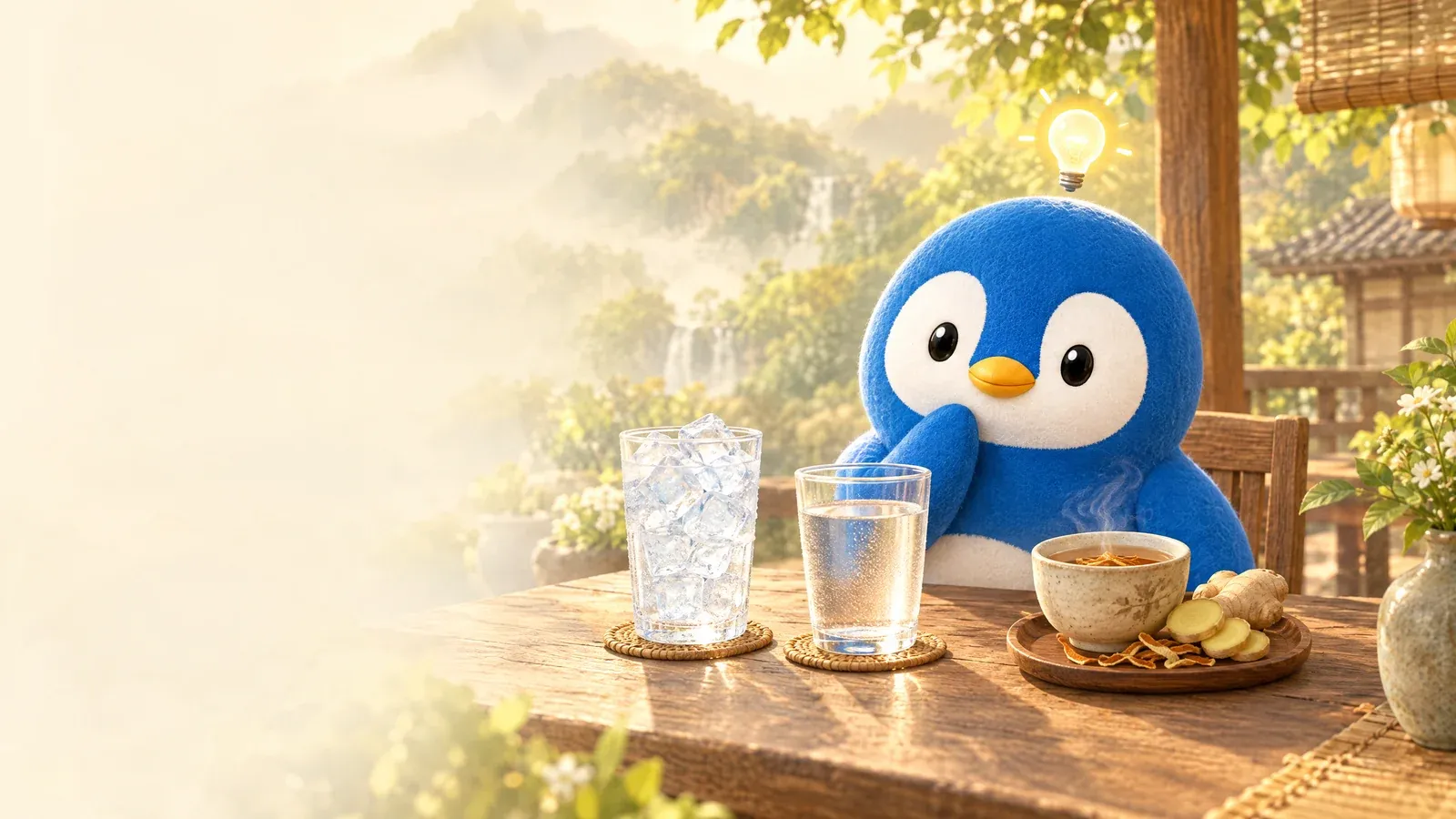 Myth buster · not news
Iced drinks always harm you?
It depends on how much and who you are — not a blanket rule.
Read