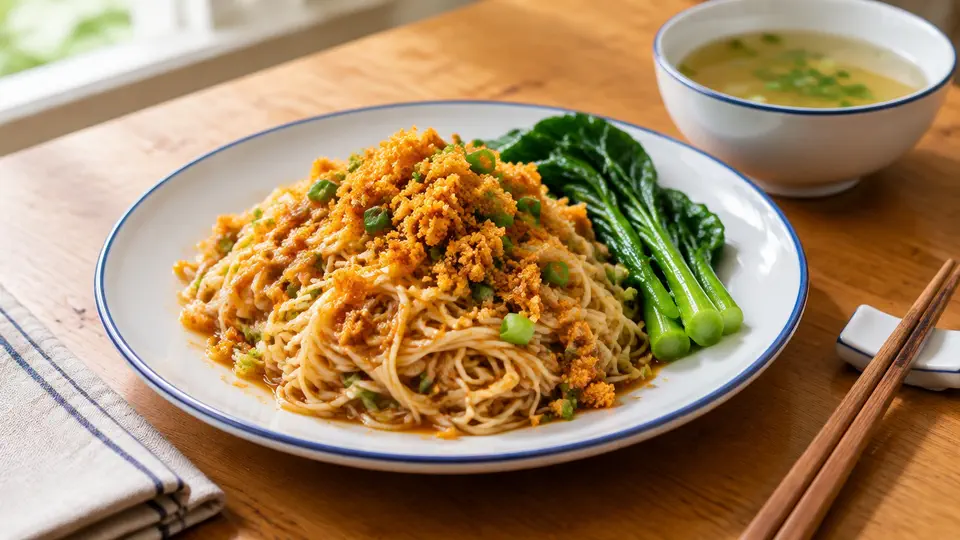
Shrimp roe tossed noodles with blanched choi sum
Springy thin noodles tossed in oyster sauce and spring onion oil and showered with fragrant shrimp roe, served with choi sum and a light broth — simple and warming.
- 15 min
- Serves 2
- Toss
- Easy
Why it suits you: Yang-deficient people feel the cold, wake with chilly hands and feet and have poor appetites, and although Chushu is still hot, hours in air conditioning easily weaken yang. Shrimp roe warms the kidneys and is full of savoury flavour, while spring onion and ginger warm the stomach and free the yang. With choi sum and a light broth, it warms without overheating.
Method
Prep 5 min · Cook 10 min- 1Toast the shrimp roe in a dry pan over a low heat for 1–2 minutes until dry and fragrant, then set aside. Cut the spring onions into lengths, keeping the white and green parts separate.
- 2Heat the oil and fry the spring onion whites and ginger slowly until golden, add the greens until fragrant, then strain off the oil and mix it with the oyster sauce, soy sauce and sugar.
- 3Bring the water to the boil, blanch the choi sum for 1 minute and lift out, keeping the water. In a separate pan of boiling water, cook the noodles for 1 minute, rinse under cold water, dip back into the hot water and drain.
- 4Toss the noodles with the spring onion oil sauce, sprinkle over the shrimp roe and serve with the choi sum. Season the choi sum water with a pinch of pepper to sip as a light broth.
Cautions
- Shrimp roe is seafood, so avoid it if you're allergic to shellfish; shrimp roe and oyster sauce are both salty, so use less if you have high blood pressure.
Chef's tips
- Toast the shrimp roe in a dry pan first to double its aroma and banish any fishiness; rinsing the noodles in cold water and dipping them back in hot water keeps them springy.
The TCM view
Shrimp roe is sweet, salty and warm, tonifying kidney yang and essence and whetting the appetite. Spring onion white is pungent and warm, freeing yang and dispelling cold; ginger warms the middle and settles the stomach; wheat noodles are sweet and cool, supporting the spleen; choi sum is sweet and cool, clearing heat and balancing the warmth. It warms the kidneys and stomach without dryness.