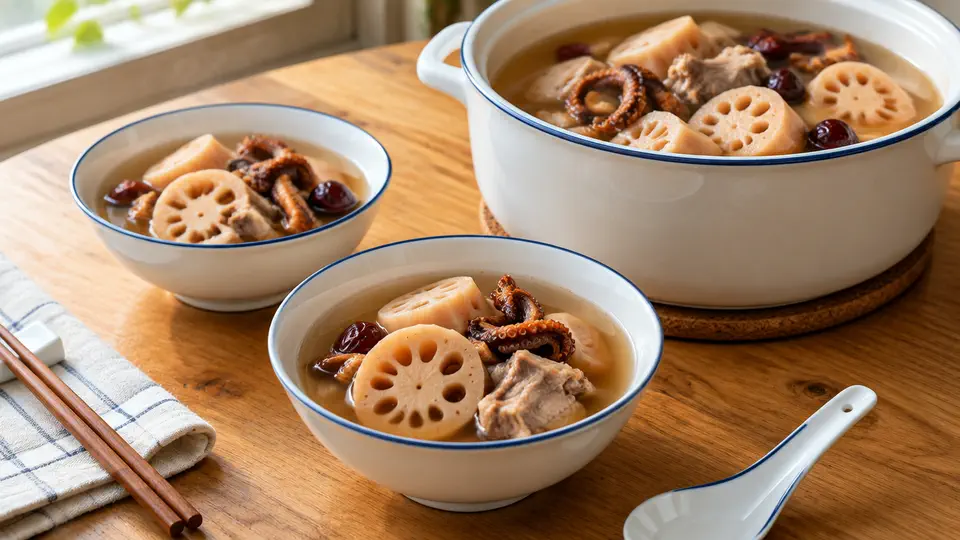
Lotus root and dried octopus soup with pork bones
Starchy lotus root, sun-dried octopus and pork bones simmered for two hours into a sweet, faintly briny, rosy broth — a Cantonese slow-cooked classic.
- 3 hr
- Serves 4
- Simmer
- Easy
Why it suits you: Blood-stasis types have sluggish circulation, with a dull complexion, purplish lips and painful periods, and as Chushu's weather turns, keeping qi and blood moving matters. Cooked lotus root strengthens the spleen and disperses stasis, octopus nourishes blood, red dates build blood and tangerine peel moves qi. Slow-simmered, it's sweet, clean and gently warming.
Method
Prep 40 min · Cook 140 min- 1Soak the dried octopus in warm water for 30 minutes until pliable, snip off the eyes and beak and cut into large pieces. Soak the tangerine peel and scrape off the pith; stone the dates.
- 2Put the pork bones in a pan of cold water, bring to the boil, blanch for 5 minutes, then rinse. Peel the lotus root, cut into large chunks and crack them with the back of a cleaver.
- 3Bring the water to the boil, add everything, boil hard for 15 minutes, then simmer gently for 2 hours.
- 4Season with salt. Serve the soup, with the lotus root and octopus on the side for dipping in soy sauce.
Cautions
- Cut back on stasis-dispersing foods during heavy periods or pregnancy; octopus is fairly high in cholesterol, so don't have this too often if you have high blood lipids.
Chef's tips
- Cracking the lotus root with the back of a cleaver releases more flavour and starch than slicing; avoid cast-iron pots, which turn the soup dark.
The TCM view
Cooked lotus root is sweet and warm, strengthening the spleen, stirring the appetite and nourishing blood — the Bencao Gangmu records that it 'disperses lingering blood'. Octopus is sweet, salty and cold, and the same text says it 'nourishes blood and boosts qi'; red dates tonify the middle and build blood; tangerine peel moves qi so blood follows; ginger tempers the octopus's coolness.