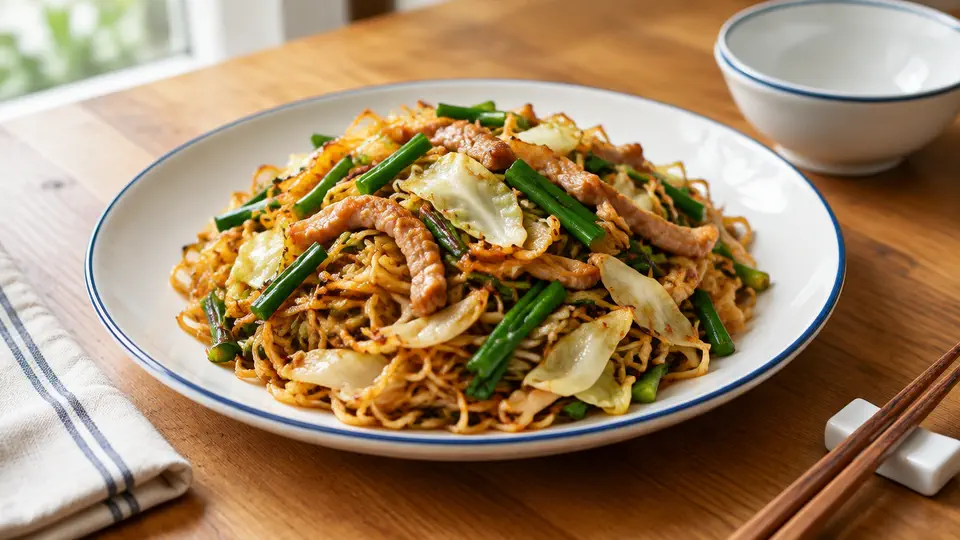
Chinese chive and shredded pork chow mein
Chinese chives, shredded cabbage and pork stir-fried over high heat and tossed with noodles — smoky with wok hei, warming and filling, and quick to make on a cold day.
- 30 min
- Serves 2
- Stir-fry
- Easy
Why it suits you: Major Snow brings deep cold, which a Yang-deficient constitution dreads most, with icy hands and feet and a sore, weak lower back and knees. Chinese chives, nicknamed yang-raising grass, are pungent and warm and support kidney yang, cabbage strengthens the spleen and pork replenishes deficiency. Served piping hot, this quick chow mein warms the stomach — ideal winter fare.
Method
Prep 15 min · Cook 15 min- 1Marinate the pork with the light soy sauce, cornflour and a splash of water for 10 minutes. Wash and cut the chives, and shred the cabbage.
- 2Blanch the noodles in boiling water for 1 minute until loosened, rinse under cold water, drain and toss with a little oil.
- 3Heat the oil in a wok, stir-fry the ginger and pork until the pork changes colour, then add the cabbage and stir-fry for 2 minutes until softened.
- 4Add the noodles, dark soy sauce and oyster sauce and toss over high heat, then add the chives, stir-fry for 30 seconds and serve.
Cautions
- Chives are pungent and warm: eat less if you have yin-deficiency heat, red eyes or mouth ulcers.
Chef's tips
- Add the chives last and toss for just a few seconds, so they stay bright green and fragrant.
The TCM view
Chinese chives are pungent and warm, warming the kidneys, supporting yang and moving qi and blood. Cabbage is sweet and neutral, strengthening the spleen and stomach and benefiting the kidneys; pork is sweet, salty and neutral, nourishing yin and replenishing deficiency, and ginger warms the middle and dispels cold. Together they warm yang and the stomach without heaviness — suited to Yang deficiency in the depths of winter.