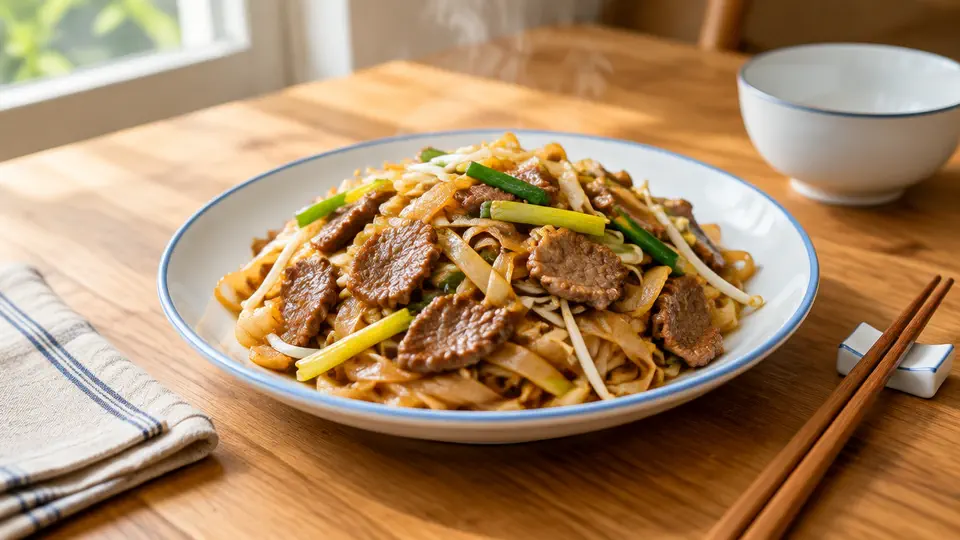
Stir-fried ho fun with beef, beansprouts and yellow chives
A lighter take on the cha chaan teng classic — yellow chives and onion get the blood moving, beansprouts add crunch and beef stays tender. On the table in 15 minutes.
- 25 min
- Serves 2
- Stir-fry
- Easy
Why it suits you: Circulation slows further in winter for blood-stasis types, bringing cold hands and feet and stiff shoulders. Yellow chives and onion are pungent and warm, moving qi and blood; beef builds qi and blood; and beansprouts cut the richness. Cooked with little oil in a non-stick wok, it keeps the cha chaan teng flavour without the grease.
Method
Prep 15 min · Cook 10 min- 1Slice the beef against the grain and marinate with 1 tsp light soy sauce, the cornflour and a little oil for 10 minutes. Cut the yellow chives into lengths and slice the onion.
- 2Pull the ho fun apart by hand and spread it out. Pick the roots off the beansprouts, rinse and drain.
- 3Heat a little oil in a non-stick wok and stir-fry the beef over high heat until about two-thirds cooked. Set aside.
- 4In the same wok, fry the ginger and onion until fragrant, add the ho fun, the rest of the light soy and the dark soy, and toss with chopsticks until evenly coloured.
- 5Add the beansprouts, chives and beef and toss over high heat for 1 minute. Serve at once.
Cautions
- With heavy periods or a tendency to bleed, use less chives and onion.
Chef's tips
- Separate the noodles before they go in and toss with chopsticks rather than pressing with a spatula, so they don't break up.
The TCM view
Yellow chives are pungent and warm, warming the middle, moving qi and dispersing stasis; onion is pungent, sweet and warm, moving qi and blood; beef is sweet and neutral, strengthening the spleen and building qi and blood; beansprouts are sweet and cool, clearing heat and cutting richness; rice noodles are sweet and neutral. Warming and freeing without being drying, it suits blood-stasis types at the Winter Solstice.