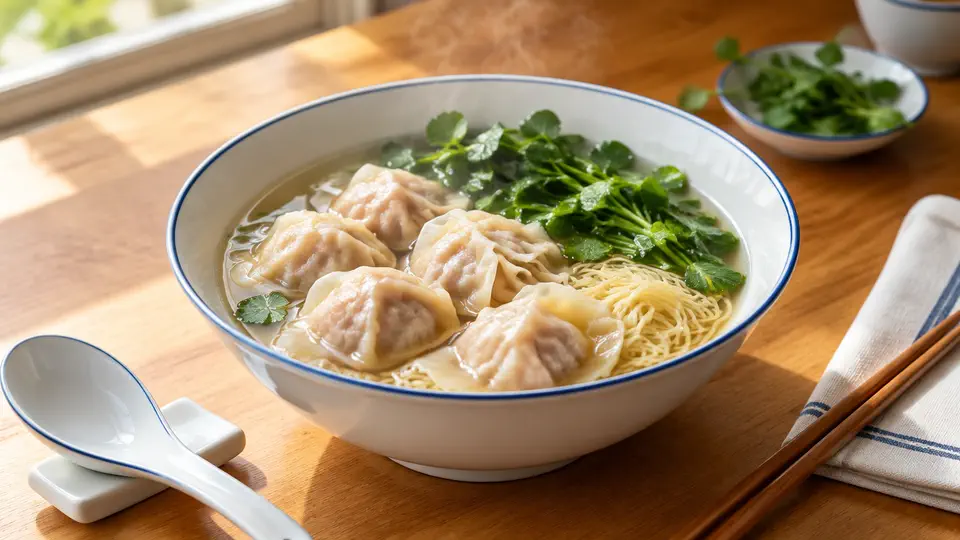
Watercress wonton noodle soup
Watercress is in season in winter, making a clear, sweet broth for pork and wood ear wontons with thin egg noodles — refreshing and never heating.
- 35 min
- Serves 2
- Boil
- Medium
Why it suits you: Damp-heat types often get a bitter taste and spots after the fried food and roast meats of the solstice feast. Watercress clears lung heat and moistens dryness, and wood ear and lean pork keep things light. A clear broth instead of a rich stock means no dry mouth afterwards, while a steaming bowl still warms you up.
Method
Prep 20 min · Cook 15 min- 1Soak the wood ear until soft and chop finely. Mix the pork with the soy sauce, cornflour and a pinch of salt, stir until sticky, then fold in the wood ear.
- 2Put a little filling on each wrapper, fold and pinch to seal. You can wrap them the night before and keep them in the fridge.
- 3Bring the water to the boil, add the watercress stems and cook for 5 minutes, then add the leaves for 2 minutes. Season with salt.
- 4In a separate pan of boiling water, cook the wontons for about 4 minutes until they float, add the noodles for 1 minute, then lift both into bowls.
- 5Ladle over the watercress soup, add a few drops of sesame oil and serve.
Cautions
- Watercress is cold — go easy with a cold, weak stomach or loose stools, and always cook it through.
Chef's tips
- Cook the stems before the leaves for a sweeter broth, and boil the wontons and noodles separately so the soup stays clear.
The TCM view
Watercress is sweet, slightly bitter and cold, clearing lung heat and moistening dryness; wood ear is sweet and neutral, cooling the blood and moistening; pork is sweet, salty and neutral, nourishing yin and moistening dryness. Clearing and slightly cool overall, it suits damp-heat types at the Winter Solstice, easing heat without upsetting the stomach.