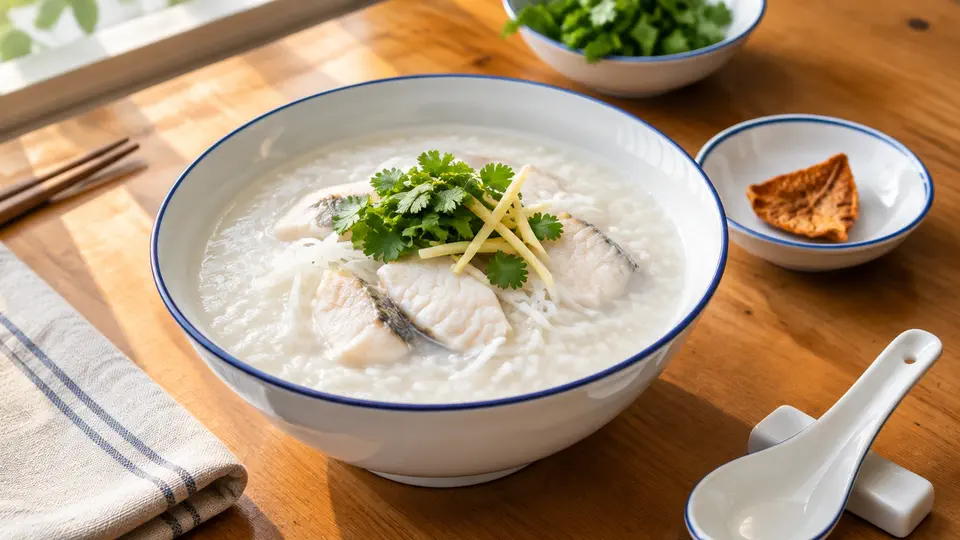
Grass carp and shredded daikon congee
Winter daikon is at its sweetest — grated into congee with dried tangerine peel, then finished with silky grass carp slices. Fresh, light and never greasy.
- 50 min
- Serves 2
- Simmer
- Easy
Why it suits you: Phlegm-damp types tend to feel heavy, phlegmy and off their food in winter, yet crave fried things. Daikon moves qi down, resolves phlegm and aids digestion, tangerine peel regulates qi and dries damp, and grass carp warms the stomach. A light congee finished with raw fish is easy to digest, so it won't leave you sluggish around the solstice.
Method
Prep 15 min · Cook 35 min- 1The night before, rinse the rice, toss with a little salt and refrigerate. Soak the tangerine peel until soft and scrape off the pith.
- 2In the morning, bring the water to the boil, add the rice and tangerine peel and simmer over medium heat for 20 minutes. Peel and coarsely grate the daikon, add it and cook 10 minutes more.
- 3Pat the fish dry and gently toss with the ginger, salt and cornflour.
- 4Bring the congee back to the boil, add the fish and stir gently, then turn off the heat and cover for 2 minutes until just cooked.
- 5Season with salt and pepper, scatter over the coriander and serve.
Cautions
- Grass carp has fine bones — take care when serving children and older people.
Chef's tips
- Ask the fishmonger to bone the fillet; add the fish last and let the residual heat cook it so it stays tender.
The TCM view
Daikon is pungent, sweet and cool, turning neutral when cooked, moving qi down, resolving phlegm and aiding digestion; dried tangerine peel is pungent, bitter and warm, regulating qi and drying damp; grass carp is sweet and warm, warming the stomach; rice is sweet and neutral, strengthening the spleen; ginger and pepper are pungent and warm. Light and phlegm-resolving overall, it suits phlegm-damp types at the Winter Solstice.