Astragalus, pumpkin and beef congee
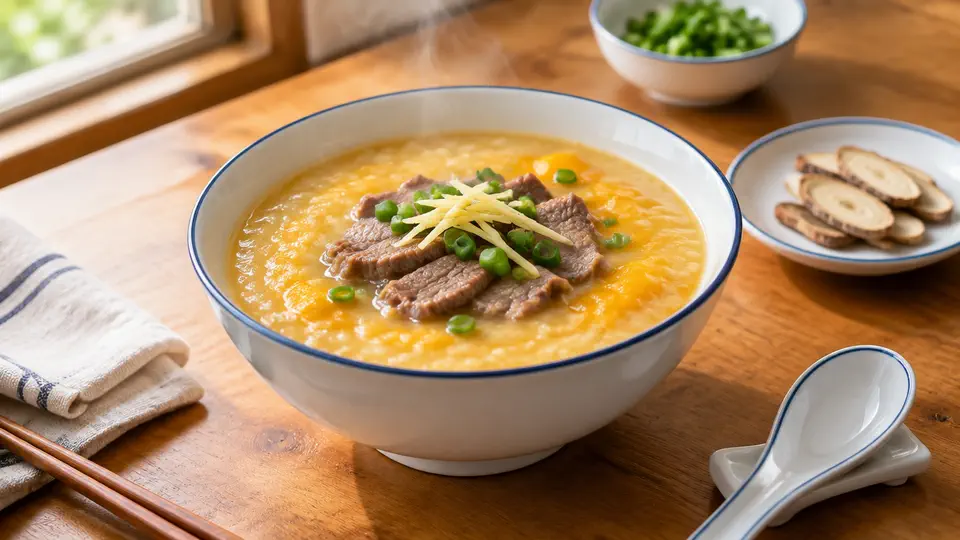
Astragalus root and pumpkin simmer into a smooth congee base, finished with marinated beef slices cooked in the hot congee — sweet, silky and restoring on solstice mornings.
- 55 min
- Serves 2
- Simmer
- Easy
Why it suits you: Qi-deficient types often have cold hands and feet and little energy in winter. Astragalus supports qi and strengthens the body's defences, pumpkin is sweet and strengthens the spleen, and beef builds qi and blood. Congee finished with raw beef is easy to digest and warming — a bowl on solstice morning brings back some vigour.
Method
Prep 15 min · Cook 40 min- 1The night before, rinse the rice, toss with a little oil and salt and refrigerate. Rinse the astragalus.
- 2In the morning, bring the water to the boil, add the rice and astragalus and simmer over medium heat for about 25 minutes. Peel and dice the pumpkin, add it and cook 10 minutes more until the congee is smooth.
- 3Slice the beef thinly against the grain and marinate with the soy sauce, cornflour and oil for 10 minutes.
- 4Lift out the astragalus. Bring the congee back to the boil, stir in the beef and ginger, then turn off the heat and cover for 1 minute until the beef is just cooked.
- 5Season with salt, scatter over the spring onion and serve.
Cautions
- Pause the astragalus during a cold or fever, or when damp heat is strong.
Chef's tips
- Add the thin beef slices last and let the residual heat cook them so they stay tender; loosen thick congee with a little boiling water.
The TCM view
Astragalus is sweet and slightly warm, supporting qi, lifting yang and firming the body's defensive qi; pumpkin is sweet and warm, supporting the middle; beef is sweet and neutral, strengthening the spleen and stomach and building qi, blood, sinews and bones; rice is sweet and neutral, harmonising the stomach; ginger is pungent and warm, warming the stomach. Sweet, warm and qi-supporting, it suits qi-deficient types at the Winter Solstice.