Fish maw, lily bulb and lean pork congee
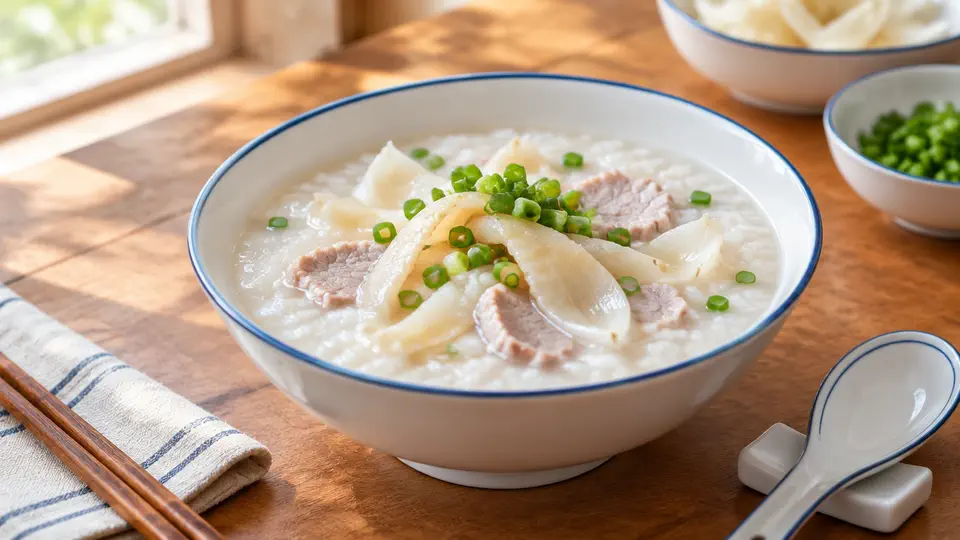
Soaked fish maw simmers with the rice until its gelatin melts into the congee, then fresh lily bulb and pork go in — silky, nourishing and never drying.
- 50 min
- Serves 2
- Simmer
- Easy
Why it suits you: Yin-deficient types get a dry mouth, itchy dry skin and poor sleep once the heating comes on and hotpot dinners pile up. Fish maw nourishes yin and blood, fresh lily bulb moistens the lungs and calms the mind, and pork moistens dryness. Simmered into a silky congee, it makes a soothing breakfast around the solstice.
Method
Prep 10 min · Cook 40 min- 1The night before, rinse the rice, toss with a little salt and refrigerate. Blanch the fish maw in boiling water with the ginger to remove any fishiness, then cut into thin strips.
- 2In the morning, bring the water to the boil, add the rice and fish maw and simmer over medium heat for about 30 minutes until smooth, stirring now and then so it doesn't stick.
- 3Slice the pork thinly and marinate with a pinch of salt and the cornflour for 5 minutes. Separate and rinse the lily bulb petals.
- 4Bring the congee back to the boil, add the pork and lily bulb and cook for 3 minutes until the pork is done and the petals turn translucent at the edges.
- 5Season with salt, scatter over the spring onion and serve.
Cautions
- Fish maw is rich in gelatin — eat less with weak digestion or lots of phlegm.
Chef's tips
- Wet markets sell ready-soaked fish maw, saving days of soaking; blanching with ginger removes any fishy smell.
The TCM view
Fish maw is sweet and neutral, nourishing yin and blood and supporting the kidneys; lily bulb is sweet and slightly cold, nourishing yin, moistening the lungs and calming the mind; pork is sweet, salty and neutral, nourishing yin and moistening dryness; rice is sweet and neutral, harmonising the stomach. Moistening without being cold, it suits yin-deficient types at the Winter Solstice.