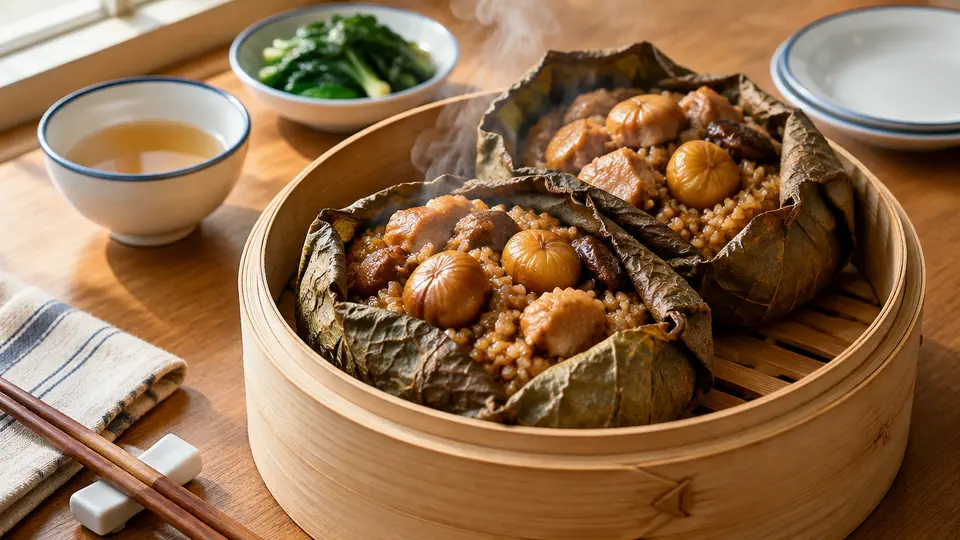
Lotus leaf sticky rice with chicken and chestnuts
The dim sum classic made at home: glutinous rice, chicken and seasonal chestnuts steamed in lotus leaf until soft, fragrant and filling.
- 1 hr 20 min
- Serves 4
- Steam
- Medium
Why it suits you: Qi-deficient types tire easily and have a weak appetite in winter. Glutinous rice supports the middle and builds qi, chicken warms and replenishes, and seasonal chestnuts strengthen the spleen and kidneys. Steamed in lotus leaf, the rice turns soft and fragrant — a filling, warming lunch around the solstice.
Method
Prep 30 min · Cook 50 min- 1Soak the glutinous rice overnight (at least 4 hours), drain and steam over high heat for 25 minutes until cooked. While hot, mix in both soy sauces and half the oil.
- 2Soften the lotus leaves in boiling water, rinse, pat dry and cut into 4 large pieces. Soak and chop the dried shrimp.
- 3Marinate the chicken with the oyster sauce, ginger, cornflour and sesame oil for 15 minutes. Stir-fry with the shrimp in the remaining oil until half cooked, then toss in the chestnuts.
- 4Lay out a lotus leaf, spread with a layer of rice, add some chicken and chestnuts, cover with more rice and fold into a square parcel.
- 5Set the parcels seam-side down on a plate and steam over high heat for 20 minutes. Unwrap and eat straight away.
Cautions
- Glutinous rice is slow to digest, so one parcel is plenty; eat less when bloated or digestion is sluggish.
Chef's tips
- Ready-peeled cooked chestnuts save time. Wrap a few extra parcels and freeze them, then steam from frozen for 20 minutes.
The TCM view
Glutinous rice is sweet and warm, supporting the middle, building qi and warming the stomach; chicken is sweet and warm, warming the middle and replenishing essence; chestnuts are sweet and warm, strengthening the spleen and kidneys; lotus leaf is neutral and lifts clear yang, cutting the richness of the rice. Sweet, warm and nourishing, it suits qi-deficient types at the Winter Solstice.