Steamed chicken with amomum on rice
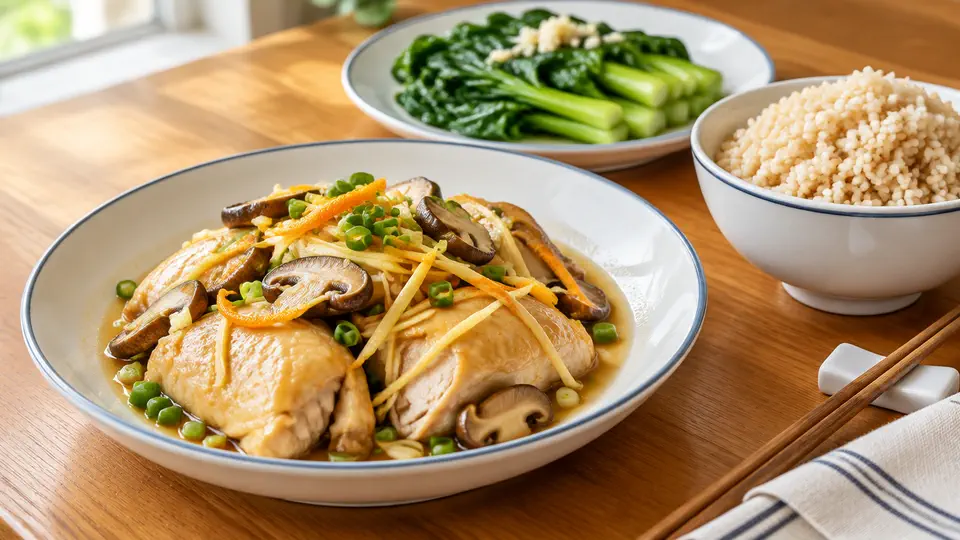
Chicken marinated with ground Yangchun amomum and steamed with ginger and tangerine peel until silky — gently aromatic and appetising, served with brown rice and choi sum.
- 35 min
- Serves 2
- Steam
- Easy
Why it suits you: Phlegm-damp types feel heavy and tired with a thick tongue coating, and as Hanlu turns cooler a sluggish spleen gathers damp more easily. Amomum transforms damp, whets the appetite and warms the spleen, tangerine peel resolves phlegm and ginger warms the middle, while chicken boosts qi. Steamed with little oil and served with brown rice and greens, it strengthens digestion without weighing you down.
Method
Prep 15 min · Cook 20 min- 1Shell the amomum, toast the seeds in a dry pan over a low heat until fragrant, then crush to a powder. Soak the tangerine peel, scrape off the pith and shred; soak and slice the shiitake.
- 2Pat the chicken dry and mix with the amomum, soy sauce, wine, cornflour and oil; leave for 15 minutes.
- 3Spread the chicken on a plate, top with the shiitake, ginger and tangerine peel and steam over boiling water on a high heat for 15–18 minutes until cooked through.
- 4Scatter with chopped spring onion. Blanch the choi sum and serve with the chicken and brown rice.
Cautions
- Amomum is pungent, warm and drying, so use it sparingly if you have a dry mouth, constipation or signs of internal heat.
Chef's tips
- Herbalists sell Yangchun amomum, which has the best aroma; toasting the seeds before grinding gives the chicken a deeper fragrance.
The TCM view
Amomum is pungent and warm, entering the spleen, stomach and kidneys, transforming damp, whetting the appetite and warming the spleen — a key herb for waking a damp-laden spleen. Chicken is sweet and warm, warming the middle and boosting qi; tangerine peel regulates qi, dries damp and resolves phlegm; ginger warms the middle; shiitake strengthens the spleen; brown rice settles the stomach.