Guava and pomelo with aged tangerine peel tea
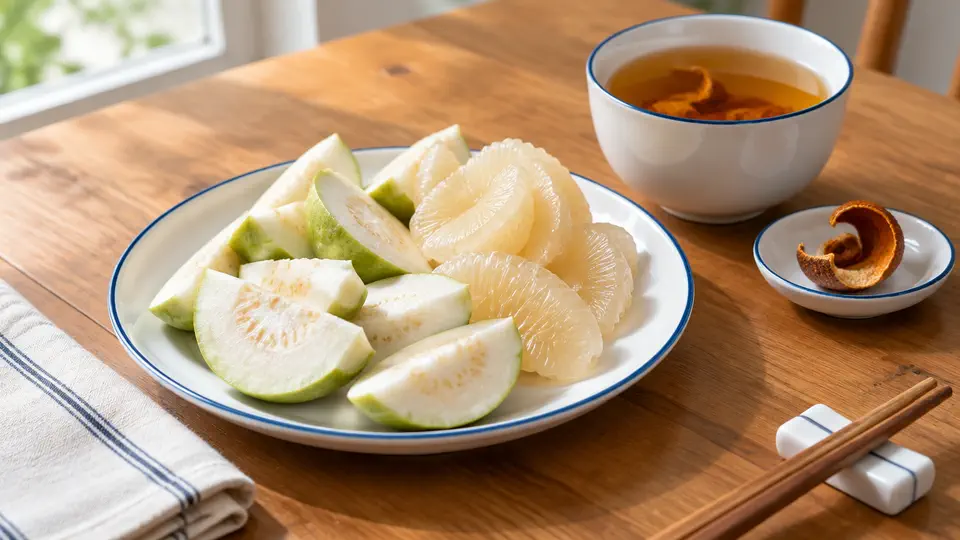
A plate of fragrant early-autumn guava and juicy pomelo with a warm cup of tangerine peel tea — refreshing, digestive and kind to a damp, sluggish system.
- 20 min
- Serves 2
- Steep
- Easy
Why it suits you: Summer damp lingers well past Start of Autumn, leaving a Phlegm-damp constitution drowsy, with a greasy taste and bloating. Guava and pomelo both come into season now, strengthening digestion, resolving phlegm and moving qi, and warm tangerine peel tea dries damp and warms the stomach — a refreshing afternoon snack that isn't cold.
Method
Prep 10 min · Cook 10 min- 1Rinse the tangerine peel and steep in the hot water for 10 minutes (it can be topped up two or three times).
- 2Wash the guava and cut into wedges — eat the skin and seeds for the most fibre; peel the pith from the pomelo and break it into pieces.
- 3Arrange the fruit on a plate and serve with the warm tea.
Cautions
- Like grapefruit, pomelo can interfere with some medicines (such as certain cholesterol and blood pressure drugs), so check with your doctor if you take regular medication; don't eat too much guava if you're constipated.
Chef's tips
- Choose a guava that smells fragrant and gives slightly when pressed, and a pomelo that feels heavy for its size for the juiciest flesh.
The TCM view
Guava is sweet, astringent and neutral, strengthening the spleen, dispersing food stagnation and firming loose stools. Pomelo is sweet, sour and cold, moving qi, resolving phlegm and aiding digestion. Tangerine peel is pungent, bitter and warm, regulating qi, drying damp and transforming phlegm, and it warms the stomach to balance the pomelo's coldness. Moves qi and resolves phlegm — suited to Phlegm-damp.