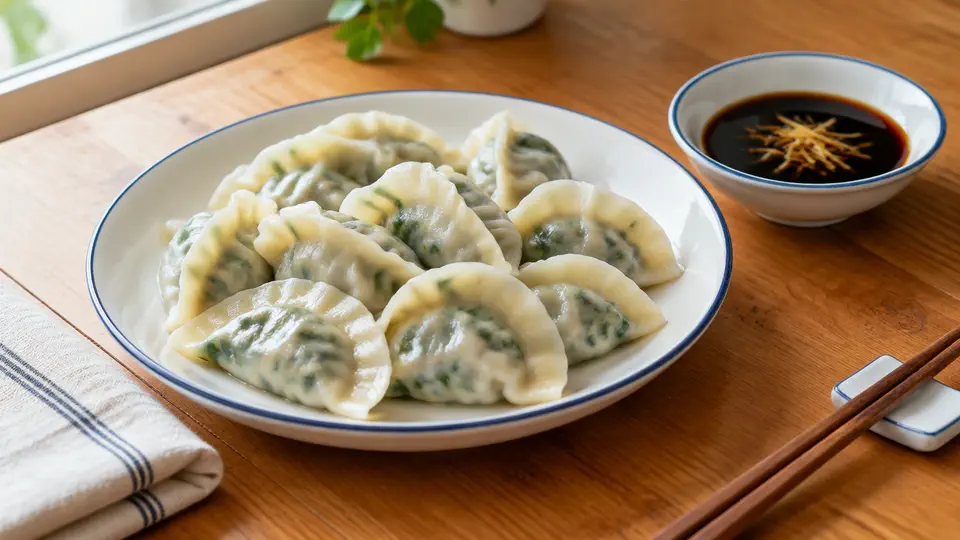
Chinese chive and pork dumplings with black vinegar
Juicy pork and chive dumplings dipped in ginger-spiked black vinegar. Wrap a batch at the weekend and freeze them for ten-minute hot breakfasts.
- 30 min
- Serves 2
- Boil
- Medium
Why it suits you: As temperatures climb after Start of Summer, a Blood-stasis constitution may feel chest tightness, numb hands and feet or period pain. Chinese chives are pungent and warm, moving qi and blood, and black vinegar helps disperse stasis. Wrap the dumplings at the weekend and freeze them, and a hot breakfast is ten minutes away on a workday.
Method
Prep 20 min · Cook 10 min- 1Mix the pork with the soy sauce, salt, pepper and 3 tbsp water, stirring in one direction until sticky, then stir in the sesame oil and grated ginger.
- 2Wash the chives and dry them thoroughly before chopping, and fold them into the filling only at the end (added too early, they weep water).
- 3Put a tablespoon of filling on each wrapper, fold in half and pinch firmly to seal; freeze any extras flat on a tray.
- 4Drop the dumplings into boiling water; when it returns to the boil, add half a bowl of cold water. Repeat twice until the dumplings float and puff up. Serve with the shredded ginger steeped in the black vinegar for dipping.
Cautions
- Chives are warming, so eat fewer when you have a dry mouth or mouth ulcers; go light on the vinegar if you have excess stomach acid.
Chef's tips
- Dry the chives well after washing before you chop them, so the filling stays firm and doesn't tear the wrappers.
The TCM view
Chinese chives are pungent and warm, warming the middle, moving qi and dispersing blood stasis. Pork is sweet, salty and neutral, nourishing yin and building strength so the chives aren't too drying. Chinkiang vinegar is sour, bitter and warm, dispersing stasis and aiding digestion, and ginger warms the stomach and dispels cold. Moving yet nourishing — good for Blood stasis.