
Autumn Equinox · Dinner · Qi Deficiency
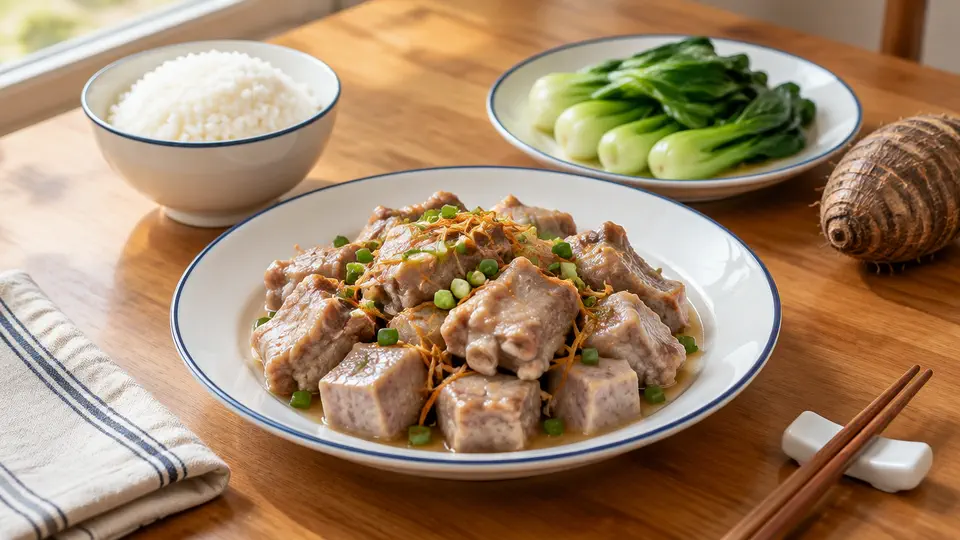
Steamed pork ribs with taro & aged tangerine peel
Soft, floury taro soaks up the rib juices, lifted by fragrant tangerine peel — gentle on digestion and satisfying.
- 40 min
- Serves 3
- Steam
- Easy
NeutralStrengthens digestion & qiMoves qi, settles stomach
Why it suits you: Qi Deficiency brings weak digestion and tiredness, and steamed food is the easiest to digest. Taro, a Mid-Autumn favourite, is sweet and neutral and strengthens digestion; with pork ribs it nourishes without heaviness. Count the taro as half your rice to stop at 70% full without bloating.
Method
Prep 15 min · Cook 25 min- 1Rinse the ribs and pat dry, mix with the soy sauce, sugar, garlic and cornflour, then the oil, and marinate for 15 minutes.
- 2Soak the tangerine peel until soft, scrape off the white pith and shred it. Wearing gloves, peel the taro, cut into 2 cm cubes and spread on a deep plate.
- 3Lay the ribs over the taro and scatter over the peel. Steam over boiling water on high heat for 20–25 minutes, until the ribs turn pale and a chopstick slides easily into the taro.
- 4While it steams, blanch the pak choi for 1–2 minutes. Scatter the spring onion over the ribs and serve with rice.
Cautions
- Always steam taro until completely soft — undercooked taro irritates the mouth and throat.
Chef's tips
- Taro is starchy, so count it as half your rice and serve smaller bowls.
- Taro sap can make your hands itch — wear gloves when peeling.
The TCM view
Taro is sweet, pungent and neutral and supports the spleen and stomach; pork ribs are sweet, salty and neutral and nourish; aged tangerine peel is pungent, bitter and warm and moves qi, so the starchy taro doesn't sit heavily. Steaming keeps it a gentle qi tonic that is neither drying nor greasy.