
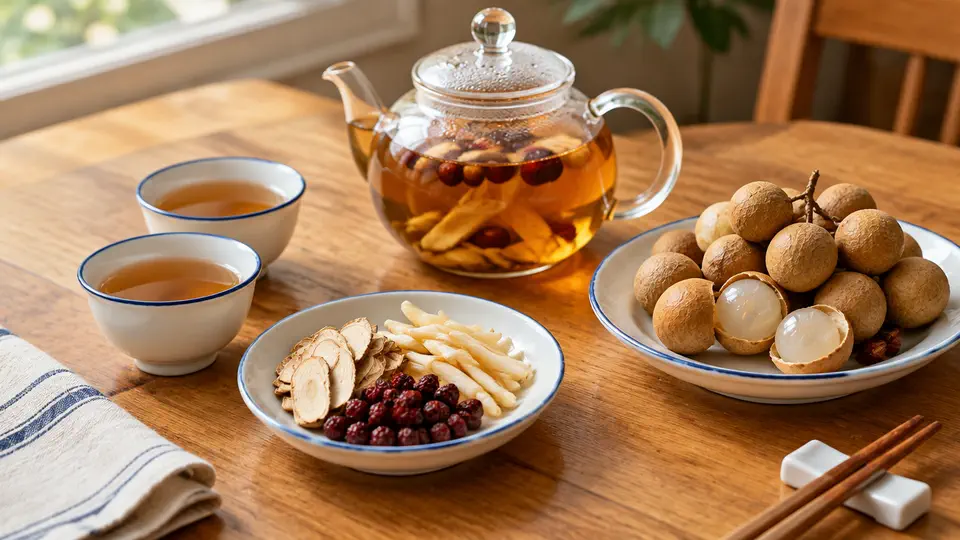
Shengmai tea with fresh longans
Codonopsis, ophiopogon and schisandra brewed into shengmai tea to boost qi and fluids, with a few fresh seasonal longans — an instant afternoon pick-me-up.
- 25 min
- Serves 2
- Simmer
- Easy
Why it suits you: Qi-deficient people tire easily, and Minor Heat's heavy sweating 'injures qi', leaving afternoons flat, with palpitations and a dry mouth. This tea is based on the classic Shengmai formula, with gentler codonopsis in place of ginseng: it boosts qi without heating, ophiopogon generates fluids and schisandra checks sweating. Fresh longans, in season from July, nourish the heart and spleen — a few are enough.
Method
Prep 5 min · Cook 20 min- 1Rinse the codonopsis, ophiopogon and schisandra, and lightly crack the schisandra berries.
- 2Put the herbs and red dates in a pot with the water, bring to the boil over a high heat, then simmer gently for 20 minutes.
- 3Strain and drink warm. Peel the longans and enjoy four or five alongside each cup.
Cautions
- Skip it during a cold, fever or chesty cough, as schisandra can lock the illness in. Longans are very sweet, so stick to a few.
Chef's tips
- Crack the schisandra so its flavour comes out; keep the tea in a flask and sip it through the afternoon at work.
The TCM view
Shengmai San, from the Jin-dynasty text Yixue Qiyuan, combines ginseng, ophiopogon and schisandra to boost qi, generate fluids and stop sweating — a classic for qi and yin drained by summer heat. Codonopsis is sweet and neutral and milder than ginseng; ophiopogon is sweet, slightly bitter and slightly cold, nourishing yin; schisandra is sour and warm, checking sweat; longan is sweet and warm, nourishing the heart and spleen.