
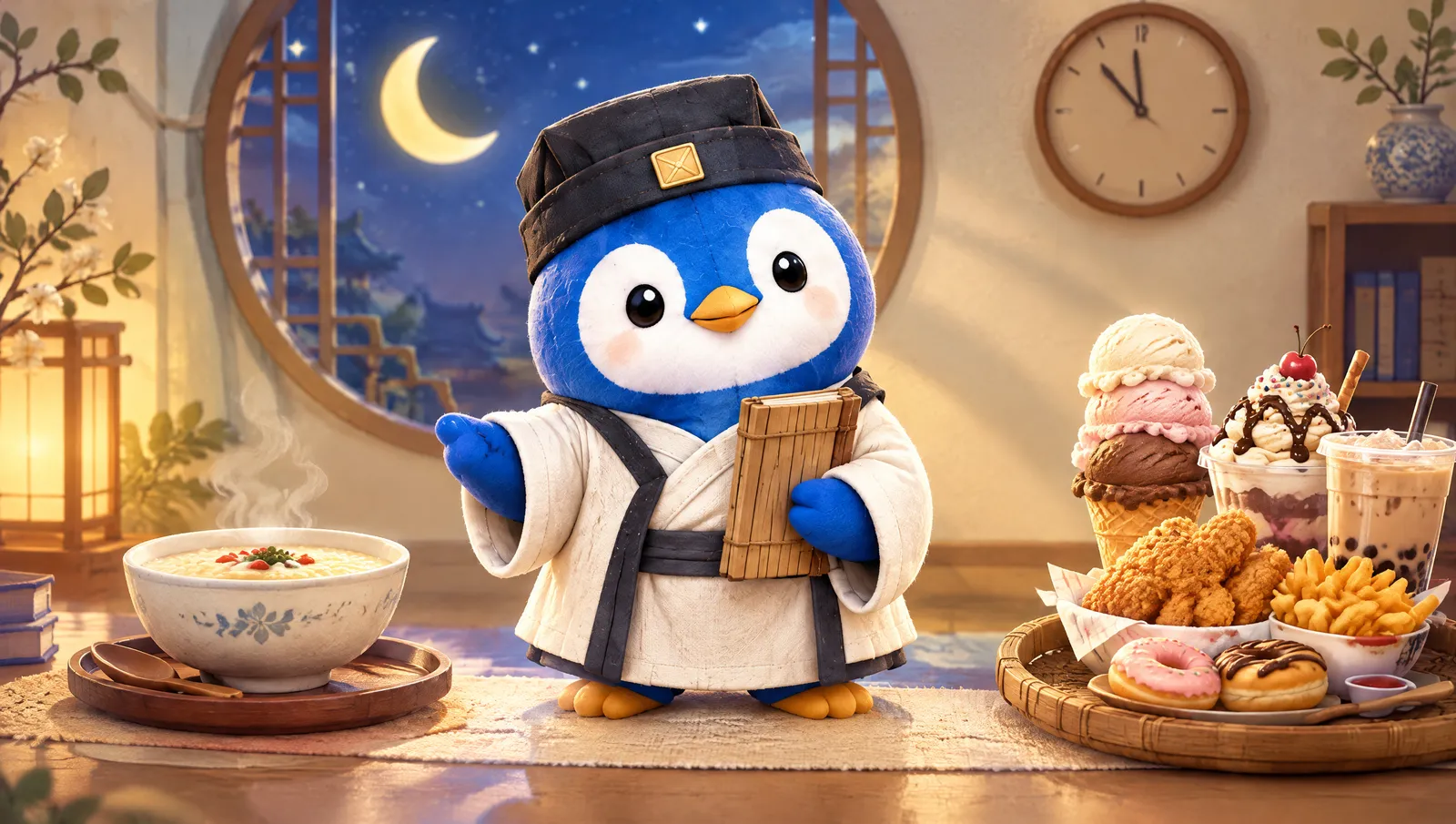
Myth buster · not news
Late-night snacks always hurt digestion?
TCM is not an absolute ban after a set hour. The concern is a heavy, cold, greasy late meal — especially if the Spleen already feels weak or damp. A small warm snack is not a pile of iced dessert.
Online advice often says “never eat after 10 or 11 p.m. — late-night snacks always hurt the Spleen and Stomach.” Behind the slogan, TCM does care whether a late meal burdens digestion and sleep. An absolute ban after a set hour is too sharp, though. A small bowl of warm congee and a pile of iced desserts or greasy barbecue are not the same load.
How TCM sees eating late
The Spleen and Stomach are called the foundation acquired after birth: they receive, ripen and transform food and drink. Digestion is often pictured as a fire that gently recedes at night. During the day, yang is more active and transformation feels smoother; after dark the organs tend toward rest, so another large meal is like calling a cook back after closing time.
The Huangdi Neijing includes the line “when the Stomach is not harmonious, rest is uneasy.” Stomach qi should descend and stay unobstructed. If you go to bed too full, food may linger — bloating and belching become more likely, and sleep may turn light or delayed. Later health texts also warn against going to bed stuffed: evenings are not the time for a very full stomach.
A popular reading of the organ clock is that the later evening leans toward quiet repair. That is not a laboratory timetable that forbids every bite after a certain minute. It is a reminder: the closer you are to sleep, the more space digestion needs — not another banquet.
“Never after a set hour” is too absolute
Popular posts love a hard cutoff: “after 10 p.m. you will definitely harm the Spleen and Stomach.” TCM is closer to weighing three things together: amount (a few bites to take the edge off hunger, or eating until you are stuffed and then lying down), temperature and texture (warm and easy to digest, or cold, oily and heavy), and how close it is to sleep (going flat right after a meal feels different from leaving a little time for Stomach qi to descend).
For people on night shifts, rotating rosters, or anyone who truly missed dinner, that late plate may be a delayed main meal. Forcing an absolute ban can leave them hungry or uncomfortable. Traditional advice in those cases is closer to: keep it light and less oily, and stop when you are no longer hungry — rather than starving, or making up the whole day in one go.
A light warm snack is not a cold dessert pile
A pile of ice cream, iced drinks or greasy fried food just before bed: most caution — cold plus richness is a heavy load, and often feels like pressure in the chest.
Late hotpot, barbecue, spicy food and large sweets: high volume and stimulation; traditionally seen as extra work for the Spleen and Stomach, and more likely to feel like qi rising the wrong way.
A small bowl of warm congee, or a little warm rice with plain cooked vegetables: if you are truly hungry, most people can try stopping at “no longer hungry,” not at fullness.
Daytime meals were already enough, and late night is only a craving: a sip of warm water and a short pause first; tiredness or habit often masquerades as hunger.
Late-night snacks are part of everyday life in Hong Kong: fish balls, spicy pot, sweet soups, ice cream. One occasional plate does not equal “ruined digestion.” TCM is more concerned with a pattern of eating late, oily and cold — especially if you already bloat easily, feel the cold, have sticky stools or wake with a puffy face. Those signs are traditionally read as a tendency toward Spleen deficiency or damp encumbrance.
Who may need more care?
If a late heavy meal leaves you unable to sleep, with chest heat, a still-full stomach in the morning, teeth marks on the tongue sides or a heavy body, that traditionally points toward weaker transformation or damp burdening the Spleen. You can try: moving the larger meal earlier in the evening; using a small warm snack only when you are truly hungry; and not lying flat immediately afterwards.
People already dealing with reflux, gastritis or marked insomnia often feel worse after late meals. Follow clinical advice rather than trading sleep for a catch-up plate.
A middle path
Keep meals roughly regular; make dinner lighter and about seven- or eight-tenths full, so you are less driven to make up the day at midnight
If you are truly hungry: small, warm and easy to digest; stop at “not hungry,” not at stuffed
Avoid making fried food, barbecue, very spicy dishes, large servings of ice cream and iced drinks your regular late meal
Leave a little time before lying down; both traditional and modern clinicians note that going flat right after eating can make reflux-type discomfort more likely
Chew well: wanting to wash food down with water or soda often means it was not chewed enough
If you work nights: use daytime eating windows well, and treat the nocturnal meal as a modest warm plate — not a punitive feast
Take extra care
Pregnancy, children, older adults, diabetes, or anyone who must eat on a schedule with medication should not suddenly fast or overhaul meals because of an absolute “no late snack” rule. Follow a doctor or a registered Chinese medicine practitioner.
For severe ongoing abdominal pain, vomiting, difficulty swallowing, black stools, unexplained weight loss, or chest discomfort that keeps worsening, seek medical care straight away. Persistent bloating, reflux or clearly worse sleep also deserve professional assessment — changing a snack habit is not a cure.
A common misunderstanding: late-night snacks always hurt digestion?
“Always” is too sharp. The closer TCM idea is that a late meal which is also heavy, cold and greasy can burden transformation and leave the Stomach “not harmonious,” which may spill into sleep — especially if the Spleen already feels weak or damp. A small warm bite to take the edge off hunger is not the same as a pile of iced desserts or oily barbecue. Swap the slogan for a workable routine: a little less, a little warmer, and a little space before sleep.
Remember
Not “never after a set hour” — keep it small, warm, and leave space before sleep.
Related ingredients
Based on traditional Chinese medicine for general wellness education — not a medical diagnosis or treatment. If symptoms persist, are severe or unusual, please see a doctor or registered Chinese medicine practitioner.