
Myth buster · not news
No water with meals?
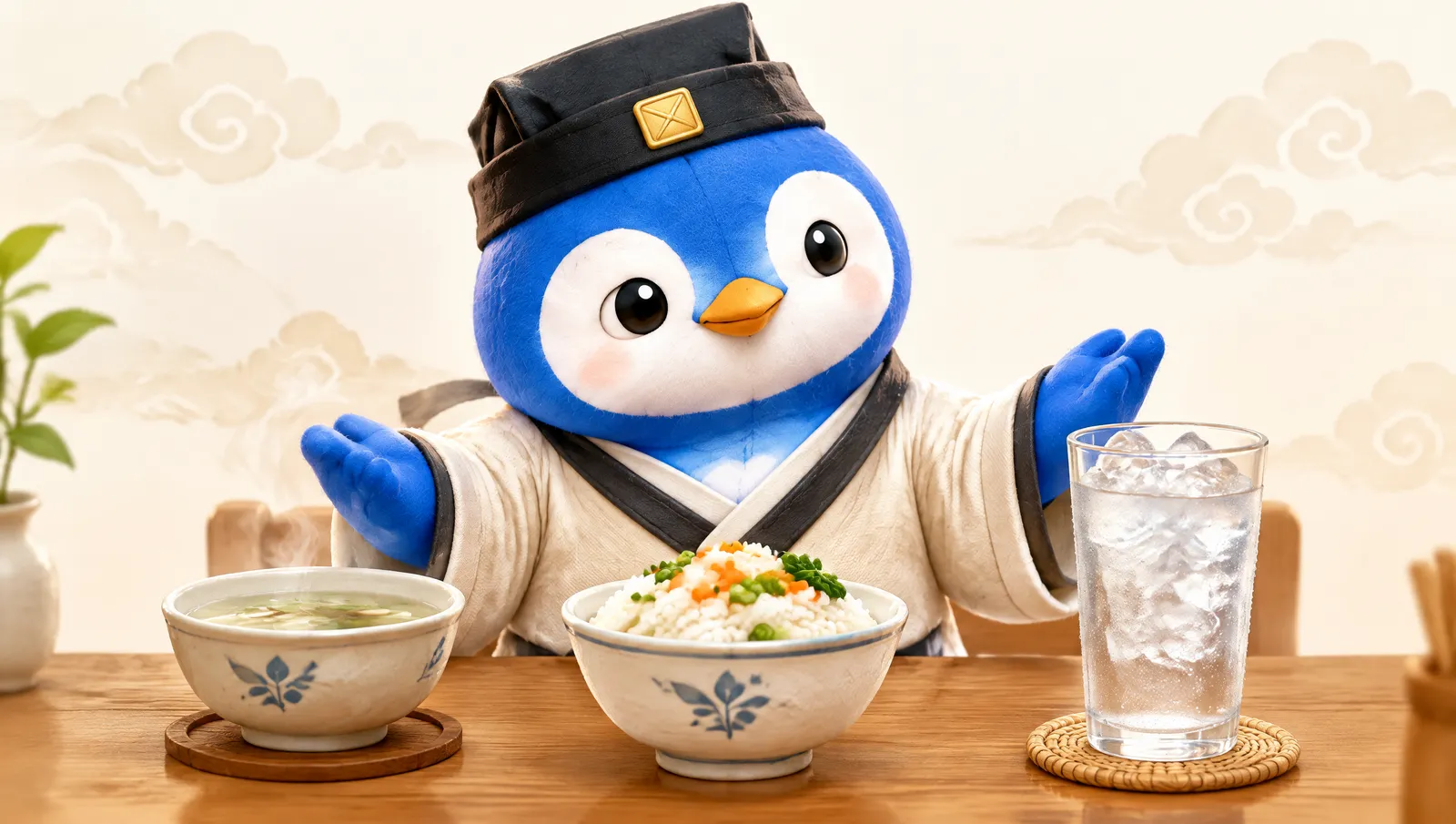
TCM is not an absolute ban — the point is small, warm sips. Large iced drinks are what to watch.
Online advice often says “never drink with meals — it dilutes stomach acid.” From a modern medical view, a normal amount of water with food rarely “breaks” digestion in healthy people. TCM uses a different picture: the Spleen and Stomach are like cooking — they need gentle warmth, and the pot should not be flooded all at once.
How TCM sees drinking while eating
In TCM the Spleen and Stomach transform food and drink. The Spleen prefers dryness and dislikes dampness. Digestion is often pictured as a pot on a fire: the Stomach receives and ripens food, and the Spleen sends the usable essence upward. Pouring in a large amount of iced water is like tipping cold water into a simmering pot — transformation slows.
That caution is about **volume** and **cold** — not a ban on every warm sip of soup with dinner.
“Diluting stomach acid” is not the TCM argument
Popular posts explain mealtime drinking with “diluted gastric acid.” In healthy people, stomach acid self-regulates; a small glass of water may shift pH briefly, then the stomach recovers. That is a modern physiology debate.
Classical TCM focus is warmth and load: whether extra fluid further burdens a Spleen already tending toward damp or cold. Keep the two languages apart.
Soup, warm water, iced water — not the same
| Situation | Gentler approach | | --- | --- | | Lots of iced water with the meal | Most caution needed, especially if you feel the cold or get loose stools | | Several large bowls of thin soup while eating | If you then feel bloated or hear gurgling, try less fluid with the plate | | Small warm sips / a small warm bowl of soup | Fine for most people as a moistener or gentle opener | | Stews, congee, dishes with broth cooked in | Water inside the food differs from gulping beside the plate |
Cantonese “soup with rice” has history: labourers who sweated heavily and children with weak appetite used warm soup to open the appetite and replace fluid. Many modern people sit more and feel damp-heavy digestion more often, so a big bowl with every bite is not automatically right for everyone.
Who may benefit from separating dry and wet?
If large drinks with meals leave you topped-up, gurgling, with teeth marks on the tongue sides, morning puffiness or sticky stools, that traditionally points toward a damp-burdened Spleen tendency. You can try: drink most water one to two hours before or after meals; keep the plate relatively dry; use small warm sips only when the mouth feels dry.
If you are only a little thirsty, hold a sip of warm water and swallow — no need to force fully dry eating.
A middle path
- Put most of your fluid between meals; a small cup 20–30 minutes before eating is fine - During the meal, sip — do not finish a large bottle - Cold hands and feet, or loose stools after iced drinks: prefer room-temperature or warm - Chew well: wanting to wash every bite down often means the food was not chewed enough - Do not slash total daily intake because you separated dry and wet; redistribute, do not restrict
Take extra care
If you have heart, kidney or liver disease with a fluid limit, or a clinician has set your intake, follow that advice. Pregnancy, children, older adults, heavy sweating after exercise, fever, or a history of urinary stones all need enough fluid.
For difficulty swallowing, unexplained weight loss, black stools, or severe ongoing abdominal pain or vomiting, seek medical care straight away.
A common misunderstanding: never drink with meals, period?
An absolute ban is too sharp. The closer TCM idea is: do not douse digestive warmth with large cold drinks — especially if the Spleen already feels damp or weak. Warm, small and sipped is a different habit from gulping. Swap the slogan for a workable routine.
Remember
Not never — small, warm sips beat big iced gulps.
Related ingredients
Based on traditional Chinese medicine for general wellness education — not a medical diagnosis or treatment. If symptoms persist, are severe or unusual, please see a doctor or registered Chinese medicine practitioner.