
TCM basics
The 24 solar terms
Roughly every 15 days a new term — a cue to adjust how you live.
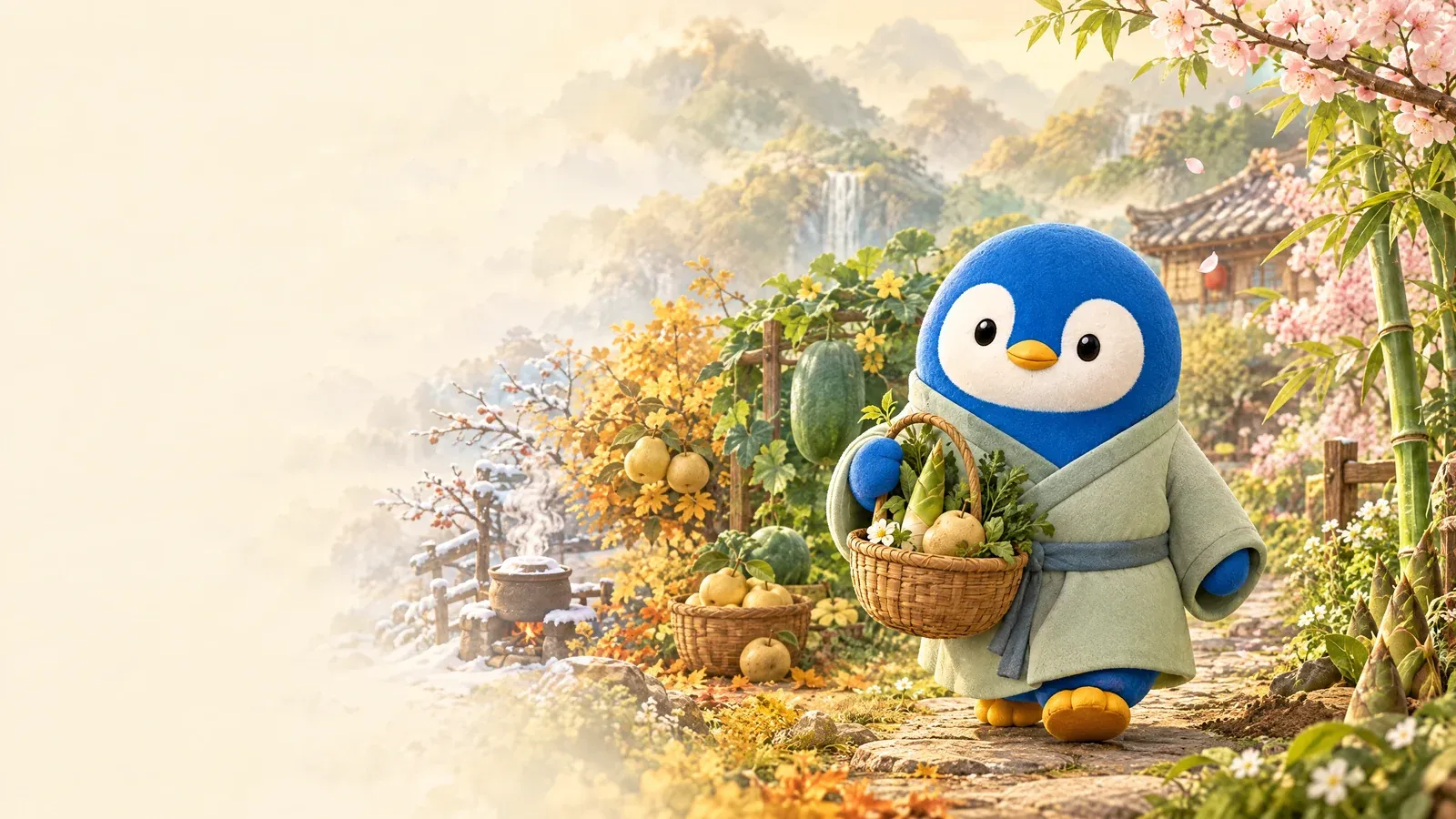
Solar terms follow the sun's position through the year, from Start of Spring to Major Cold. TCM wellness is about "following the season", with food and routine cues for each term.
Where do the solar terms come from?
Ancient observers divided the sun's yearly path into twenty-four segments of about fifteen days each. Each season has six terms; spring, for example, runs from Start of Spring through Rain Water, Awakening of Insects, Spring Equinox and Clear and Bright to Grain Rain. The names are wonderfully practical: "Awakening of Insects" is when spring thunder wakes hibernating creatures, "Grain in Ear" is time to sow bearded grains, and "Frost's Descent" is when the first frost appears.
The terms began as a farmer's calendar for planting and harvest, and later became a wellness guide too: as the weather changes, routine and food change with it.
Food through the four seasons
Spring is a time of growth, so meals lean light; seasonal vegetables such as spring bamboo shoots are fresh and not heavy. Summer is hot, with sweating and a weaker appetite, and cooling, watery foods such as winter melon make ideal soups. Autumn is dry, leaving the throat and skin parched, so Asian pears in a sweet soup or stewed are a classic. Winter is cold and the body wants more warmth; a lamb pot on the truly cold days is the traditional choice.
One simple rule covers most of it: eat what is in season. Seasonal produce tastes better, costs less and is easy to find at the wet market, and it naturally suits the time of year. For more on each one, see the Related ingredients section below.
Your routine follows the seasons too
The classic text Huangdi Neijing gives concrete seasonal advice: in spring and summer, "sleep late and rise early"; in autumn, "sleep early and rise early"; in winter, "sleep early and rise late", waiting for the sun. In other words, long summer days allow a slightly later night and an early start, while short autumn and winter days call for earlier rest.
You don't need to follow it to the letter, but it makes a useful nudge. When it gets dark early in autumn and winter, don't drift past midnight; when summer mornings are bright, take a walk while it is still cool.
Using them in Hong Kong
Hong Kong weather differs from northern China, so pair the term with the Observatory forecast; a muggy autumn equinox is no reason to rush into rich tonics.
A few local examples. After Start of Autumn, Hong Kong is often still hot, the so-called "autumn tiger", and light, moistening foods suit better than warming tonics. In spring, the sticky "returning south wind" days call for lighter, less greasy meals. The Winter Solstice family dinner is a Hong Kong tradition, and by then the weather has usually cooled, so a warming soup fits nicely.
A common misunderstanding: when the term arrives, follow the rule
Some people see "Start of Autumn" and immediately begin feasting on rich food to "build up for winter", or start drinking cooling tea every day once "Start of Summer" arrives. The terms are a general direction. What matters is the actual weather and how your body feels.
Lamb is warming, so go easy while the weather is still warm or if you run hot. Pear is cooling, so stew it if your digestion runs cold. Bamboo shoots are high in fibre, so keep portions moderate if your digestion is sensitive. Eating by the season is a good habit, but don't let the calendar replace paying attention to your body.
Remember
Terms are cues, not rules — always match the real weather and your own body.
Related ingredients
Based on traditional Chinese medicine for general wellness education — not a medical diagnosis or treatment. If symptoms persist, are severe or unusual, please see a doctor or registered Chinese medicine practitioner.