

TCM basics
What does tongue reading look at?
Colour, coating and shape are key clues in TCM observation.
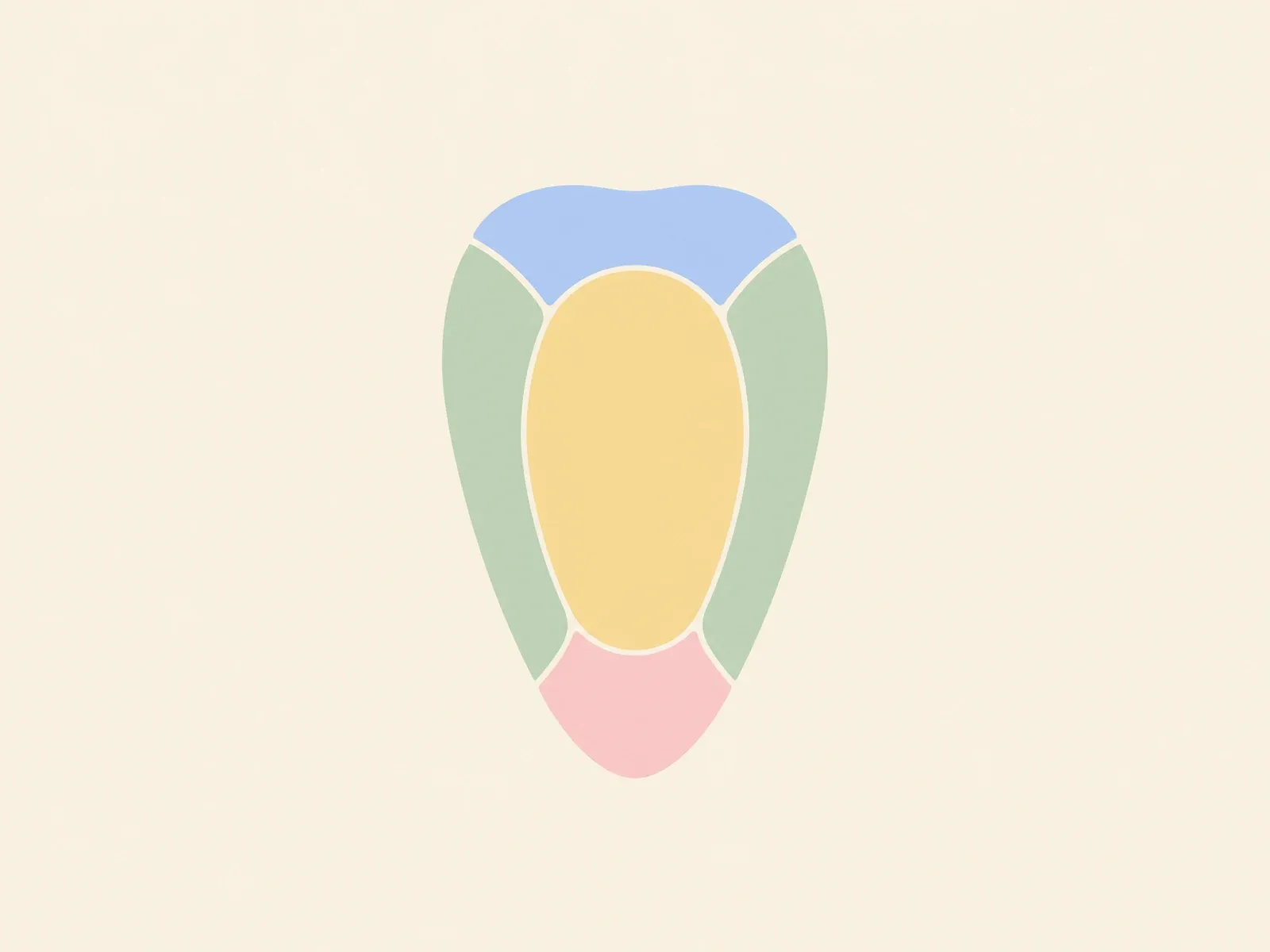
Practitioners look at three things: colour (pale red is typical), coating (thin and white is typical) and shape (size, tooth marks). Tip, centre and root are linked with different organ systems.
Colour, coating and shape
The typical tongue colour is pale red, moist and slightly glossy. Traditionally, a paler tongue may be linked with low qi and blood or a colder tendency, a redder tongue with a warmer tendency, and a dusky purple tongue with sluggish circulation.
The coating is the thin film on the surface. Typically it is thin, white and even, with the tongue showing through. A thicker, yellower or greasy-looking coating makes a practitioner think of dampness, heat or a digestion working hard.
Shape is about size and edges. A puffy tongue with tooth marks along the sides is often linked in TCM with a tired digestion and dampness; a thin, dry tongue more often with low fluids. These are traditional descriptions, always read alongside everything else.
Tongue areas
TCM maps the tongue into zones: the tip is linked with the heart and lungs, the sides with the liver and gallbladder, the centre with the spleen and stomach, and the root with the kidneys. For example, people who stay up late and feel restless sometimes have a redder tip, and people whose digestion is overloaded may have a thicker coating in the centre.
This map is an aid to observation, not a one-to-one test result. The same sign can have different causes, so a practitioner always combines it with the pulse, other symptoms and your lifestyle.
Everyday things that change the tongue
Plenty of ordinary things change how a tongue looks. Coffee, milk tea, red wine, curry, orange juice and coloured sweets can stain the coating. Scraping your tongue hard when brushing thins the coating. The tongue looks different just after waking and just after a meal. Some medicines and smoking also affect colour and coating.
Lighting matters a lot too. Warm yellow light makes a tongue look yellower; cold white light makes it look paler. To compare over time, look at the same time of day in similar light.
Photo tips
Use natural light, avoid photos right after coffee or coloured food, and stick your tongue out gently.
A few more pointers. The best time is in the morning before brushing and before breakfast. Stand near a window but out of direct sun. Relax your tongue and let it lie flat; curling it or pushing it to a point darkens the colour. Make sure the camera is in focus and the whole tongue is in the frame. Taking photos the same way each time is what makes comparisons meaningful.
A common misunderstanding: one look at the tongue tells you what is wrong?
The tongue is only one clue in TCM observation. A single tongue photo cannot tell you what is going on, and it does not replace a doctor's examination. PANguin's tongue feature is there to help you notice everyday changes, for wellness reference only.
If you often have tooth marks or a thicker white coating, gentle everyday foods such as Chinese yam and poria, with regular meals and sleep, are a reasonable choice. For more on each one, see the Related ingredients section below. But if a sore, white patch or lump on your tongue has not cleared in two weeks, or its colour changes suddenly, see a doctor promptly.
Remember
The tongue is one clue among many — it is read together with everything else.
Related ingredients
Based on traditional Chinese medicine for general wellness education — not a medical diagnosis or treatment. If symptoms persist, are severe or unusual, please see a doctor or registered Chinese medicine practitioner.