

TCM basics
Food natures and flavours
Cold, cool, neutral, warm, hot — plus sour, bitter, sweet, pungent and salty.
TCM classes foods from cold through neutral to hot. Winter melon is cooling, ginger warming and corn neutral. If you feel the cold, lean warm; if you run hot, lean cool.
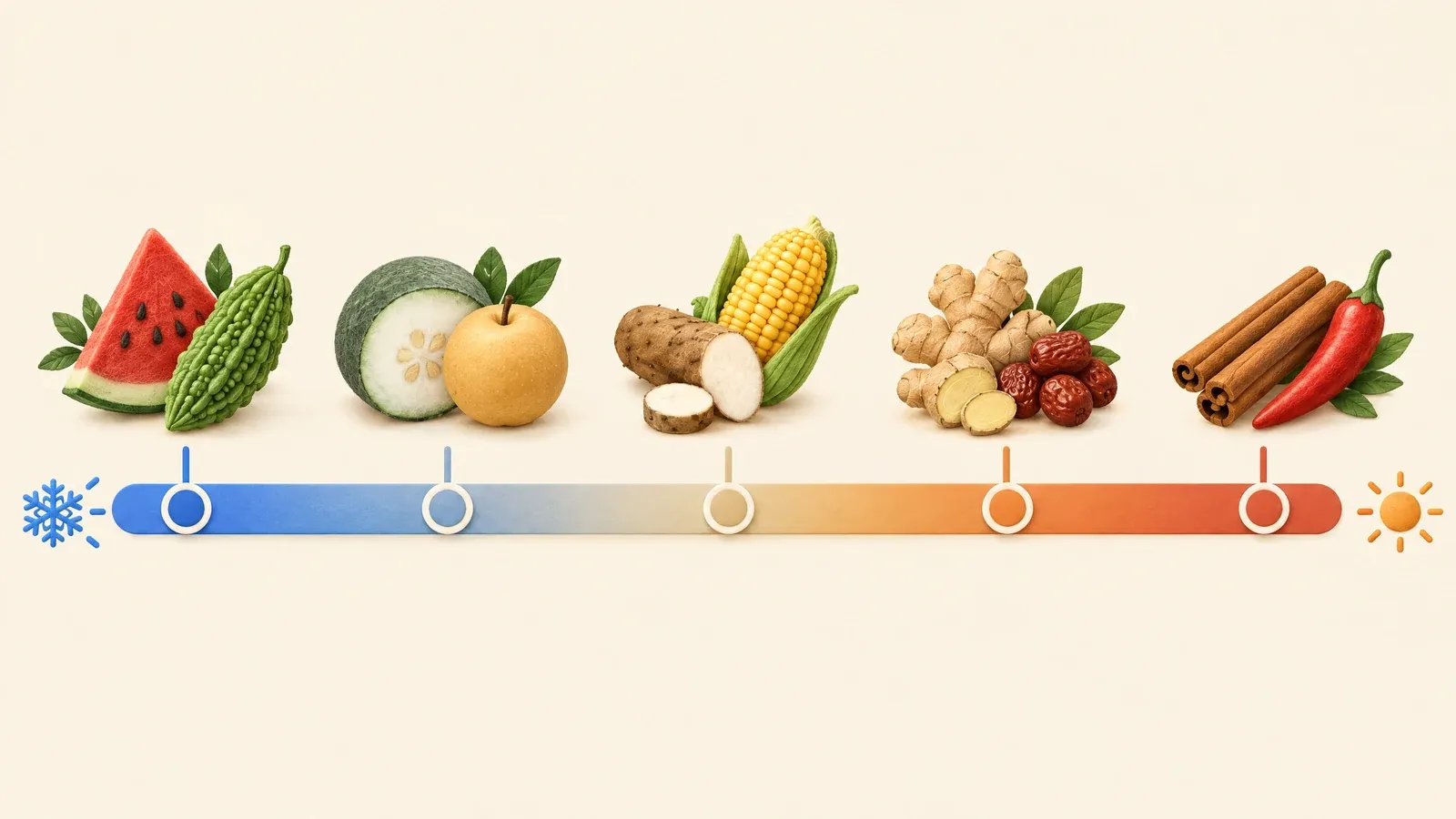
How are foods sorted?
A food's "nature" comes from generations of observing how the body responds after eating it. Foods that leave you feeling cool and refreshed, such as bitter melon and watermelon, are cold or cooling. Foods that warm you up, sometimes to the point of sweating, such as fresh ginger and cinnamon, are warm or hot. Foods with no clear lean either way, such as sweet corn, Chinese yam and white rice, are neutral.
Most everyday foods are neutral or only mildly cooling or warming, so there is no need to worry over every bite. What matters is leaning heavily one way for a long time, such as fried and spicy food every day, or iced drinks and cooling soups every day.
The five flavours
Each flavour has a traditional role: pungent (ginger, spring onion) disperses, sweet (red dates, yam) nourishes.
A few more examples. Sour is astringent, as with smoked plum and lemon; a light lemon water is refreshing when you sweat a lot in summer. Bitter clears heat, and bitter melon is the classic example. Salty is traditionally seen as softening, as with kelp and nori. TCM holds that the five flavours should be balanced; leaning hard on one, such as too much salt or sugar, does the body no favours in the long run.
Building a balanced meal
TCM eating is really about pairing, and Cantonese cooking already has plenty of examples. Bitter melon stir-fried with egg and garlic uses warm garlic to balance the cold melon. Winter melon soup gets a few slices of ginger. Crab comes with ginger vinegar. With hotpot, many people order a sugarcane and imperata root drink. These are all everyday ways of balancing cool and warm.
At home you can think the same way. If the main dish is cooling, add ginger, spring onion or garlic. If it is warming, such as lamb or fried food, add a plate of light vegetables, and finish with warm water rather than an iced drink.
Choosing for yourself
If you feel the cold, have cold hands and feet or loose stools, lean on neutral and warm foods, and cook cooling foods with ginger. If you run hot, with a dry mouth or breakouts, lean on neutral and cool foods and cut back on fried and spicy food.
Think about the season too. Hong Kong summers are hot, but many people spend all day in air-conditioning, so their bodies may not really be "hot", and there is no need to load up on cooling food. Bitter melon and winter melon are cooling, so keep them moderate if your digestion runs cold; bitter melon is also best limited in pregnancy. Use ginger moderately when you feel hot, and watch red date portions if you have diabetes, as they contain sugar. For more on each one, see the Related ingredients section below.
A common misunderstanding: piping hot food is warming?
A food's nature is about its character, not the temperature it is served at. A steaming bowl of winter melon soup is still cooling; ginger tea poured over ice is still made from warming ginger. So "I'm drinking hot soup, so it must be warming" does not always hold.
On the other hand, cooling does not mean bad. On a hot day, a moderate amount of cooling food can make you feel better. What counts is how much you eat and who you are, not sorting foods into good and bad.
Remember
Balancing cool and warm within a meal is more useful than chasing one "superfood".
Related ingredients
Based on traditional Chinese medicine for general wellness education — not a medical diagnosis or treatment. If symptoms persist, are severe or unusual, please see a doctor or registered Chinese medicine practitioner.